The global service sector is undergoing a fundamental metamorphosis, one where automation is evolving from a mere supporting tool into the very bedrock of the business model. The concept of fully autonomous hospitality—long relegated to the realm of futuristic speculation—is now manifesting in physical form in China. A pioneering project on the West Artificial Island aims to demonstrate that the synergy of artificial intelligence and robotics can entirely displace human labor across a hotel's operational lifecycle. This is not merely the deployment of isolated gadgets, but the engineering of a unified digital organism capable of orchestrating the entire guest journey.
On China's West Artificial Island, an ambitious project is taking shape that promises to redefine the very standards of the tourism industry. By 2027, the island will see the opening of a hotel where operations are delegated entirely to robotic systems. Unlike contemporary "smart" hotels, where robots merely augment human staff, this facility is conceived as a closed-loop service ecosystem, eliminating the need for human presence across every stage of the guest experience.
At the core of this technological leap is the deep integration of specialized hardware and advanced orchestration algorithms. The hotel's "brain" will be the PuduFM 1.0 base AI model, working in tandem with the PuduAgent intelligent agent. Together, they function as a "digital director," coordinating all intelligent operations in real time. In the realm of artificial intelligence, this approach aligns with the concept of Embodied AI—where a large language model (LLM) is granted a physical form to interact directly with the material world.
The hotel's infrastructure, which includes 44 premium rooms, a restaurant, and a gym, will operate as a unified control circuit. Every service element—from the initial guest check-in to the final room turnover—is integrated into a single, seamless logistical pipeline.
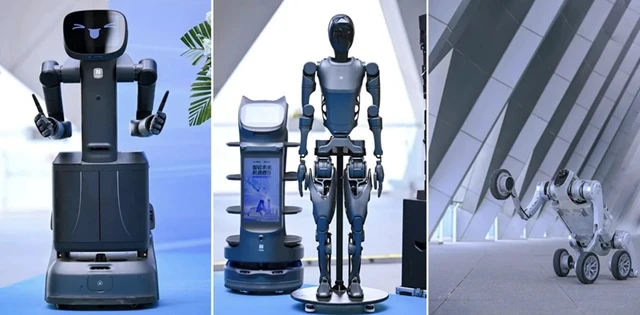
The robotic fleet is organized by strict functional specialization. Commercial interaction and rapid fulfillment are handled by the FlashBot, which is integrated with a system of intelligent vending machines: guests order beverages via smartphone, and the robot executes the delivery. Luggage logistics are managed by the PUDU T300, ensuring a frictionless transfer of belongings from the lobby directly to the room. Maintaining sterility and order are the responsibilities of the PUDU CC1 Pro and PUDU MT1—specialized cleaning units that leverage computer vision to detect debris and dynamically adapt to changes in the interior environment.
The critical advantage of this system lies in its unified intellectual framework. This allows devices of varying physical forms and disparate tasks to operate within a shared information field. While a reception robot interprets a guest's gestures and social cues, the delivery system simultaneously optimizes transit routes, and cleaning modules adjust their schedules based on real-time room occupancy.
This "full-scenario" approach to service eliminates the friction and gaps that frequently arise from coordinating different contractors or shifting personnel. The entire guest journey is transformed into a mathematically precise algorithm, where efficiency is maximized by removing the variability of the human factor.
The project will be rolled out in phases. The first autonomous service capabilities and a limited pool of rooms are expected to be available to the public by late 2026. However, the hotel is merely the starting point of a broader strategic vision for the West Artificial Island. Over the next four years, robotic solutions will be systematically implemented across all tourism and service sectors of the region, effectively transforming the island into the world's largest living laboratory for autonomous service technologies.
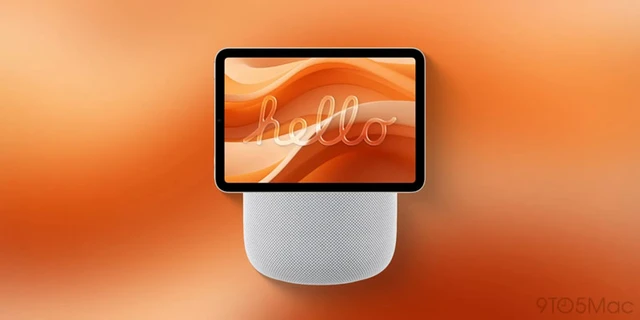 The Evolution of the Apple Home Ecosystem