Modern geopolitics is increasingly shifting the locus of strategic influence toward near-Earth space, where orbital access has become the ultimate hallmark of technological sovereignty. Leveraging its formidable expertise in microelectronics, Taiwan is now seeking to pivot this capability toward the aerospace and rocketry sector. The successful test of the Maraho sounding rocket marks a pivotal first step in this strategic transition. This is not merely about reaching a specific altitude; it is about establishing a comprehensive development lifecycle for complex aerospace systems. This launch lays the groundwork for future autonomous missions to Low Earth Orbit (LEO).
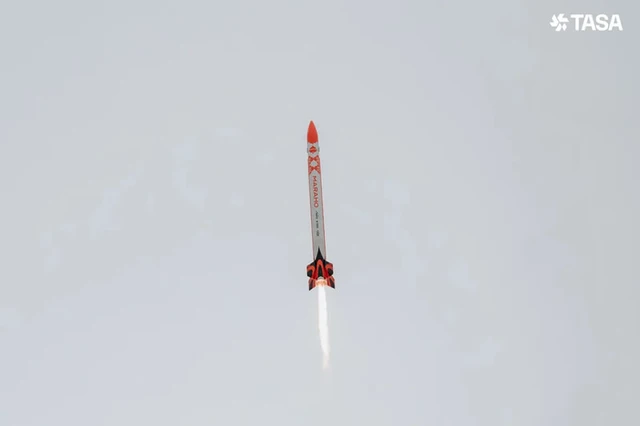
The events of August at the Xuhai research range in Pingdong County marked Taiwan's transition from theoretical planning to the practical realization of its space ambitions. The launch of the Maraho rocket—previously designated under the technical index SR400—represents the first tangible milestone for the Taiwan Space Agency (TASA) under its orbital launch program initiated in 2023.
The technical profile of the Maraho is a classic example of a sounding rocket, designed to validate fundamental flight principles and data transmission. Measuring 7.2 meters in length with a diameter of 0.4 meters, the vehicle is powered by a hybrid propulsion system utilizing a mixture of 90% hydrogen peroxide and polypropylene. The choice of a hybrid architecture was driven by a commitment to safety and cost-efficiency; such engines are more straightforward to operate than liquid-fueled systems and offer greater stability than solid-fuel alternatives.
During the flight, the propulsion system operated for 18 seconds, delivering a liftoff thrust of 1,500 kgf. The vehicle broke the sound barrier, reaching a velocity of 408 m/s (approximately Mach 1.2) and attaining an apogee of 8.1 km. The total mission duration spanned 432 seconds, providing engineers with a representative dataset on the system's dynamic behavior.
However, the true value of this launch lay not in the metrics of altitude or speed, but in the validation of the operational infrastructure. TASA successfully confirmed the stability of the communication link between onboard systems and ground stations, ensuring uninterrupted telemetry. Critical components were rigorously tested, ranging from avionics and tracking systems to ground support and recovery mechanisms.
The final phase of the flight proceeded according to protocol: a two-stage parachute system deployed, and the rocket performed a splashdown. Although heavy swells and drift prevented the recovery team from retrieving the physical vehicle from the water, the mission is classified as a complete success. All essential data was transmitted to the ground, and the team gained invaluable experience managing the full product lifecycle—from blueprints and assembly to the final launch.
This success serves as the jumping-off point for Taiwan's long-term strategy to achieve space autonomy. The development roadmap follows an iterative approach: the first-generation suborbital rocket, STV1, is slated for testing by 2029, followed by the enhanced STV2 by 2031. The culmination of this phase will be the launch of a full-scale orbital launch vehicle in 2034.
The ultimate objective is ambitious yet precise: the capability to independently deliver a payload of approximately 200 kg into Low Earth Orbit (LEO). In the modern geopolitical landscape, such a capability represents more than just scientific progress; it is the ability to deploy proprietary satellite constellations for communication and monitoring, which is critical for ensuring the region's technological resilience.
 Geespace’s Orbital Expansion into the IoT Sector