The race for space dominance is entering a new era of full-scale commercialization and strategic scaling. SpaceX continues to refine the Starship architecture, optimizing the delivery of super-heavy payloads to operational orbits. The recent full-scale static fire test of the Super Heavy booster served as a critical validation of the entire propulsion system ahead of the next launch. This milestone clears the path for the fourteenth test flight and the subsequent deployment of a next-generation satellite constellation.
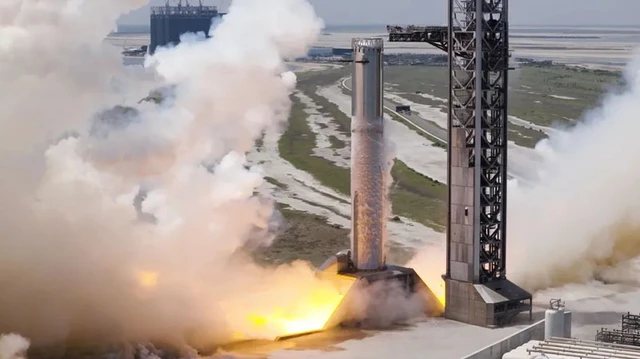
On August 28, SpaceX reached a pivotal technical milestone on the launch pad: the first full-scale static fire test of the Super Heavy V3 first stage. The test utilized the maximum configuration, igniting all 33 Raptor V3 engines simultaneously to simulate actual launch conditions. The absence of technical glitches indicates that the system is ready for the next phase; any remaining schedule delays are now likely attributable to external factors rather than internal engineering hurdles.
A static fire test serves as a rigorous "stress test" for the rocket while it remains securely bolted to the launch pad. This methodology allows engineers to analyze propulsion performance in real-time, verifying the integrity of propellant feed systems, control precision, and telemetry quality under peak load—all while eliminating the risk of losing the vehicle during a failed ascent.
The Super Heavy booster is a monumental engineering feat. At its core are 33 Raptor engines utilizing a full-flow staged combustion cycle powered by a mixture of liquid methane and liquid oxygen. This combination generates the colossal thrust required to lift the massive two-stage system. While the first stage is tasked with escaping Earth's gravity well, the Ship upper stage handles the final push. It is equipped with six Raptor 3 engines: three optimized for the dense atmosphere and three vacuum-rated versions for operation in the void of space. With upper-stage testing completed a week prior, the current success of Super Heavy effectively closes the primary fire-test cycle before final assembly.
The upcoming 14th flight promises to be an inflection point for the entire program. The primary mission objective is to deploy Starlink V3 satellites into a full operational orbit. The previous 13th launch showed incremental progress: the system successfully delivered 20 satellites into space, though they were placed on a suborbital trajectory and incinerated in the atmosphere after just twenty minutes. The current stakes are higher, focusing on long-term orbital stability to validate the system's operational readiness.
However, one of the program's most ambitious elements—the capture of the returning booster by the launch tower—will be omitted this time. Despite high-profile promises of "catching" the rocket mid-air, the decision was made to postpone this maneuver for several months. The sheer complexity of the return process and the need for flawless synchronization across all systems demand additional time and caution.
Precise launch dates remain fluid. Beyond technical readiness, SpaceX must secure clearances from regulatory bodies, which often becomes the primary bottleneck in launch schedules. While initial plans targeted a late August departure, it is highly probable the event will shift to September. In the coming days, the aerospace community's attention will shift toward the launch of NASA's new Roman telescope, making the pause before the Starship launch both logical and justified.
 Space Debris Poses a Growing Threat to Low Earth Orbit Constellations