Deep space exploration demands absolute precision and uncompromising hardware reliability. In the pursuit of building the most powerful rocket in history, SpaceX frequently confronts the stark realities of engineering risk. The recent Starship launch failure serves as a poignant reminder of how precarious the balance can be between breakneck innovation and technical stability. This setback underscores the critical importance of every single one of the thirty-three Raptor engines within the overarching flight control architecture.
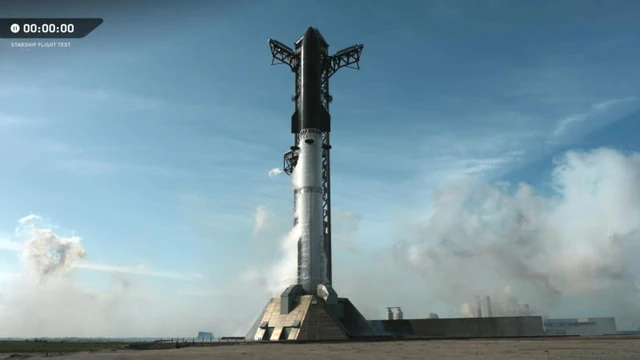
Tension mounted at the Starbase facility in South Texas as SpaceX entered the final preparations for the 13th test flight of the Starship system. Scheduled for mid-July, the rocket had already entered its ninety-minute launch window. However, at the critical moment—just as the thirty-three Raptor engines powering the Super Heavy booster ignited—the mission was abruptly scrubbed.
The company's initial response was measured; SpaceX representatives stated they required time to analyze the cause of the failure. However, Elon Musk’s team, known for its rapid iterative development cycle, quickly localized the issue. It was determined that two Raptor engines required replacement to ensure absolute safety and mission success for the upcoming attempt. Such incidents underscore the inherent complexity of full-flow staged combustion engines, where a single minor defect can trigger a cascading system failure.
This flight was intended to be the second major trial for the Starship Version 3 (V3) modification. The previous launch of this version in May demonstrated both the triumphs and the pitfalls of the new configuration. While the upper stage successfully reached its target, the Super Heavy booster failed to return to the designated coordinates for a controlled splashdown in the Gulf of Mexico, and one of the vacuum-optimized Raptor engines failed to relight in space.
The objectives for Flight 13 remain ambitious, largely mirroring the goals of the previous phase. Engineers are striving for pinpoint precision in returning the first stage to its designated point in the Gulf, while the spacecraft itself is slated for a massive transcontinental flight, culminating in a landing off the coast of Western Australia.
However, the primary technical highlight of this mission is the payload. For the first time, Starship has been loaded with 20 next-generation Starlink V3 satellites. This represents a pivotal step in the strategy to deploy a constellation of 100,000 spacecraft into low Earth orbit (LEO). Despite their designation as "payload," these satellites are not intended for permanent orbit; the ship will place them on a suborbital trajectory, after which they will re-enter the atmosphere approximately twenty minutes later.
Of particular interest are six Starlink units equipped with specialized cameras. Their mission is to capture detailed footage of the spacecraft's heat shield during reentry. This method allows SpaceX to gather unique empirical data on how ceramic tiles behave under extreme thermal stress—data that is critical for developing a fully reusable transport system. Consequently, even a delayed launch remains a vital part of the calibration process for what is arguably the most complex flying machine in human history.
 Tecno Bezelless: The Pinnacle of Screen Minimalism