The global semiconductor market is currently navigating an era of profound regionalization and a fierce pursuit of technological sovereignty. In such a climate, the slightest inkling of strategic mergers or asset transfers between industry titans immediately sparks market volatility. Rumors surrounding SK hynix’s potential acquisition of Intel’s stalled Ohio project serve as a textbook example of how investor anticipation can outstrip corporate reality. Despite a brief surge of market optimism, the underlying reality points to a far more cautious stance from both corporations.
The microelectronics industry is currently operating under intense pressure: the United States' drive to localize chip production is colliding with staggering capital expenditures and systemic operational risks. Against this backdrop, statements from SK Group leadership regarding their readiness to expand manufacturing capacity within the U.S. were interpreted by the market as a signal of potential expansion. The Korea JoongAng Daily pushed the narrative further, reporting that the South Korean giant was interested in acquiring Intel's unfinished complex in Ohio. The news triggered an immediate ripple effect, forcing both corporations to issue formal denials.
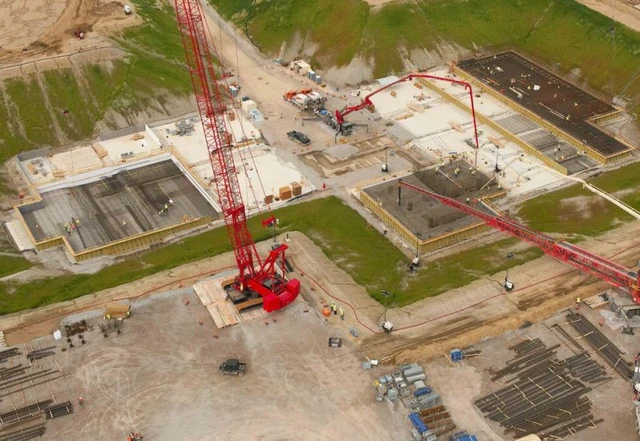
The saga of the Ohio project serves as a textbook example of the risks associated with a "speculative build-ahead" strategy. The foundation of the complex was laid back in 2022 under Pat Gelsinger, who bet on creating redundant capacity before the market had actually generated the corresponding demand. However, by the middle of the decade, these ambitions collided with harsh economic realities: work on the site was frozen, and the expansion strategy underwent a rigorous review following leadership changes. Despite the current stagnation, Intel has not officially abandoned its plans, maintaining that the first facility in the complex could launch by 2030 or 2031 as part of a broader blueprint to establish eight factories.
Financial markets reacted to the rumors with swift, emotional volatility. SK hynix shares on the Seoul exchange surged by 8.4%, while Intel's stock climbed 8.64%. Notably, the rally in the American manufacturer's shares was driven not only by hopes of asset divestment but also by news of workforce reductions within its server division—a move traditionally viewed by investors as a necessary step toward cost optimization.
It is critical to distinguish between full-scale wafer fabrication and subsequent processing stages. While SK hynix is indeed investing $3.87 billion in a facility in Indiana, this site is dedicated exclusively to the testing and packaging of memory chips. This is a pivotal stage, particularly given the evolution of High Bandwidth Memory (HBM) for artificial intelligence, yet the actual wafers will continue to be produced at the company's Asian plants.
The logic driving investors who anticipated the Ohio deal was simple: Intel Foundry remains deeply loss-making, and offloading underutilized assets could significantly alleviate the company's financial burden. Nevertheless, the strategic interests of both parties do not currently align for such a scenario. While the market continues to search for signs of consolidation within the semiconductor sector, the actual maneuvers of these companies remain focused on surgical optimization and a cautious expansion of their U.S. footprint.
 Energy Autonomy: The Extreme Edition