The global race for dominance in low-Earth orbit (LEO) internet is ascending to a new technological echelon. For years, the Falcon 9 rocket—the gold standard for reliability and reusability in modern astronautics—served as the bedrock of this expansion. However, SpaceX's current ambitions demand a manifold increase in both payload capacity and launch cadence to realize the next evolutionary phase of the network. The transition to the Starship system marks a definitive paradigm shift: moving from the incremental scaling of the constellation to the massive, industrial-scale deployment of gigabit infrastructure.
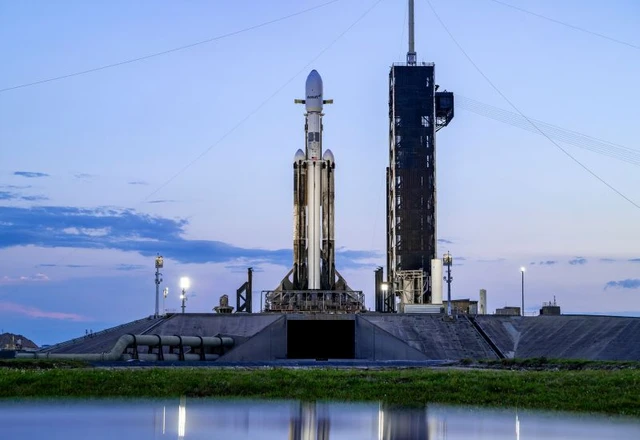
The era of Falcon 9’s hegemony over Starlink operations at Florida's launch sites is drawing to a close. Recent launches from Cape Canaveral have served as a final crescendo in a multi-year saga where this rocket was the primary instrument for sculpting the satellite constellation. Over seven years of operation, the Falcon 9 has facilitated 260 missions from Florida and 422 Starlink launches in total, enabling the deployment of a fleet that now numbers 11,000 spacecraft. Now, the operational model is pivoting: Florida's launch pads are being repurposed for other priorities, including ISS cargo delivery, while the deployment of communications satellites from this region is being fully delegated to the Starship system.
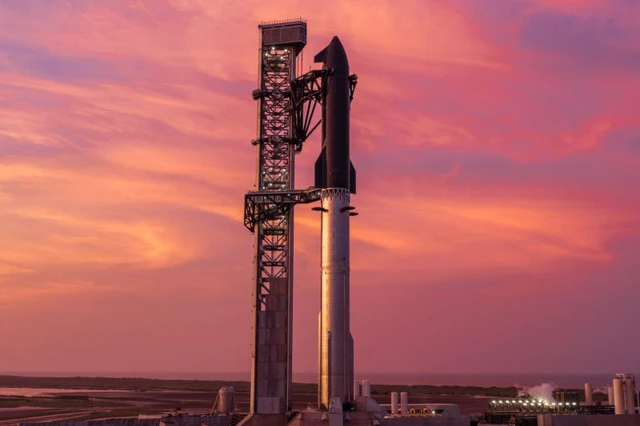
This strategic pivot is driven by the rigorous demands of next-generation hardware. Starlink V3 satellites are significantly heavier and more powerful than their predecessors; engineered to deliver gigabit data speeds, they require a fundamentally different payload capacity. Despite its efficiency, the Falcon 9 has become too restrictive for such ambitions. Starship is designed to solve this bottleneck, offering a colossal cargo bay and the ability to deploy dozens of heavy satellites in a single flight. The first V3 units are slated for orbit during the upcoming Starship test missions, which are currently in the critical phase of orbital flight validation.
SpaceX’s developmental logic suggests a transition from infrequent, meticulously planned launches to an industrial-scale pipeline. The objective is to increase Starship's launch cadence to several flights per day. Once the system achieves the requisite level of reliability, the company's engineering and production capacities will be fully redirected to sustain this tempo, effectively leading to the gradual decommissioning of the Falcon 9. However, the Falcon 9 will retain specific niches—such as Starlink launches from the Vandenberg Space Force Base in California—to ensure orbital coverage across different inclinations.
Scaling the network requires more than just new rockets; it demands a fundamental reimagining of ground infrastructure. In this context, the centerpiece is the construction of a new, ultra-high-capacity spaceport, Starbase, on the Gulf Coast of Louisiana. This facility, with construction scheduled to begin in 2027, is poised to become the largest launch site in human history. Plans envision the creation of more than ten launch towers, enabling up to 30 Starship launches per day.
The first flights from Louisiana are expected by 2029. Such infrastructural power will allow SpaceX not only to provide ubiquitous gigabit internet and full-scale mobile connectivity capable of competing with terrestrial operators but also to realize the concept of orbital data processing hubs. Consequently, the Louisiana spaceport will serve as the foundation for transforming Starlink from a mere connectivity provider into a comprehensive, space-based cloud infrastructure.
 SpaceX’s Hundred-Billion Dollar Leap into Louisiana