The global race for space supremacy is evolving, shifting from an era of experimental sorties to a phase of industrial-scale exploitation. SpaceX is transcending its role as a mere launch provider, evolving into the architect of a comprehensive interplanetary infrastructure. The development of a massive spaceport in Louisiana signals a strategic pivot toward high-cadence orbital access. This initiative aims to blur the line between science fiction and operational reality, establishing a seamless logistics pipeline for transporting payloads beyond the atmosphere.
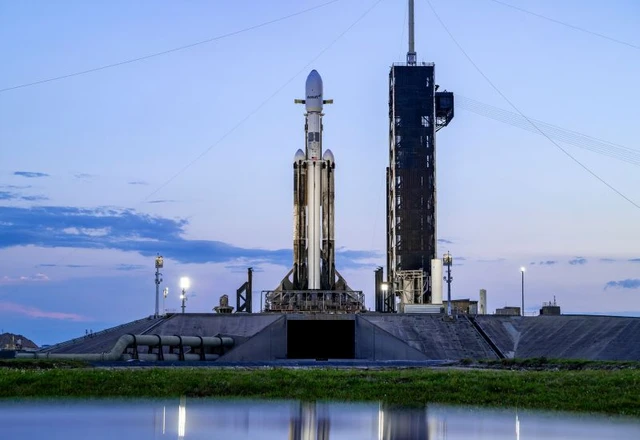
Elon Musk’s pursuit of technological hegemony manifests not only in the creation of xAI as a challenger to OpenAI but also in the aggressive scaling of SpaceX’s physical infrastructure. To realize his ambitions for the mass deployment of the super-heavy Starship rocket, the company is initiating the construction of a new launch complex in Louisiana. This project will serve as the third strategic node in the system, complementing existing sites in Texas and at Cape Canaveral, Florida.
The scale of the enterprise is staggering: 506 square kilometers of land have been allocated on the state's coast, with total investments in the facility's development estimated at $100 billion. The choice of location is driven not merely by geography, but by strategic calculus—proximity to natural gas sources will optimize fuel logistics for Starship, transforming the spaceport into a self-sustaining energy and industrial nexus.
The new facility, following the traditional "Starbase" nomenclature, will be a sophisticated ecosystem. It will comprise five launch complexes, each equipped with two launch pads. These are far more than mere concrete slabs; they represent a full-scale industrial cluster integrating fuel production, power generation, and maintenance centers for reusable systems. Given the operational demands of Starship, which require rapid turnaround for repeated flights, the infrastructure will be designed for maximum autonomy. Furthermore, the project envisions the creation of a comprehensive residential enclave for personnel and their families, effectively evolving the spaceport into a dedicated technological city.
Construction is slated to begin next year, with full operational capacity expected by 2029. The project is anticipated to create between 3,000 and 10,000 new jobs, catalyzing regional economic growth.
However, the overarching strategic objective of this expansion extends beyond simply increasing launch frequency. In synergy with the gargantuan Terafab plant in Texas, SpaceX aims to achieve production rates that allow for multiple Starship launches per day. Such throughput is essential for one of the company's most audacious plans: the deployment of up to one million specialized satellite-based data centers powered by Nvidia compute. In essence, orbit is to be transformed into a colossal distributed supercomputer.
Parallel to this, Starship will assume the primary responsibility for deploying the next generation of Starlink satellites. This will lead to the gradual phasing out of the Falcon 9 from primary launch cycles. While the Falcon 9 was once the primary workhorse, its role will be relegated to secondary tasks, while the core capacities of Florida and Louisiana concentrate on the operation of Starship.
Despite this aggressive industrial approach, SpaceX maintains its intent to mitigate its environmental footprint. The project includes coastal restoration programs and enhanced storm surge protections. Particular emphasis is being placed on the stewardship of migratory bird habitats in the surrounding marshes, ensuring that the intensive rhythm of rocket launches does not disrupt the region's ecological balance.
 The Speed Limits of Modern Gaming Displays