The line separating human cognitive exertion from machine intelligence is irrevocably blurring, manifesting in the most unlikely of arenas: the examination hall. The proliferation of affordable, AI-integrated smart glasses has reduced traditional assessment methods to a vestigial ritual—one that can no longer safeguard academic integrity. We are witnessing more than just a novel method of cheating; we are facing a systemic crisis of the entire educational paradigm. This challenge demands a fundamental reimagining of how we evaluate human capability in an age of ubiquitous neural networks.
The rapid evolution of wearable technology has pushed academic dishonesty into a new era of stealth. In South Korea and Taiwan, cases have already emerged involving the use of smart glasses to retrieve answers in real time. Often, the only telltale sign of AI assistance is a student's strange, unnatural gaze as they read information projected directly onto the lenses—a subtle cue that remains nearly invisible to proctors.
Regulatory responses have been swift, yet they remain primarily punitive rather than systemic. In China, where over ten million students sit for annual entrance exams, authorities have initiated comprehensive screenings of all optical wear. Similarly, UK regulators are warning of the growing threat posed by AI glasses and covert earpieces. However, these attempts to ban devices feel like tilting at windmills: gadgets are becoming thinner, their designs blend seamlessly with standard frames, and advancements in battery life and connectivity make them virtually indistinguishable from ordinary eyewear.
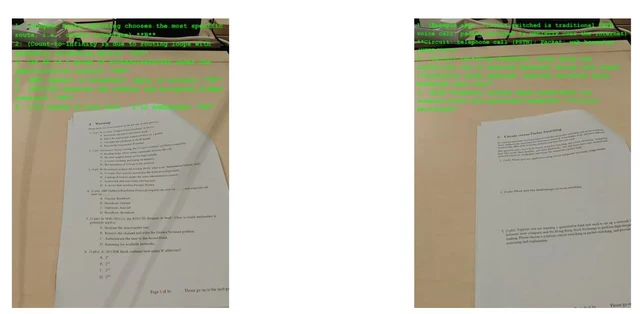
The technical efficacy of such devices was empirically validated during an experiment at the Hong Kong University of Science and Technology (HKUST). Researchers tested commercial AI glasses during an electrical engineering exam to gauge the technology's actual potential. The mechanism is elegantly simple: an integrated camera captures the text of a question, transmits it to a Large Language Model (LLM), which then generates an answer and projects it directly onto the lenses. The results were staggering—the user placed in the top five among more than a hundred students, significantly outperforming the group average.
This precedent exposes a fundamental flaw: modern education still relies heavily on memory retrieval and the reproduction of learned patterns. When the tool for accessing information becomes an extension of the human physique, the traditional exam loses its utility. The current situation with wearable AI mirrors the shock triggered by the debut of ChatGPT in 2022, when it became clear that the written essay was no longer a reliable proxy for a student's actual knowledge.
The expert community emphasizes that fighting gadgets is a dead end. The real challenge lies in the urgent need to rethink pedagogy and assessment. Rather than attempting to isolate students from technology, educational systems must shift their focus toward developing metacognitive skills and critical thinking. The primary objective should be ensuring that students do not "outsource" their cognitive abilities to neural networks, but instead utilize them as tools for intellectual augmentation.
Statistical data further underscores the scale of this shift. According to research by the Pew Research Center, a significant portion of American teenagers already view the use of chatbots for studying as the norm. When one in ten admits to delegating their homework entirely to artificial intelligence, it becomes evident that we have reached an inflection point. Education must evolve from testing the ability to memorize information to testing the ability to synthesize and apply it in complex, non-standard scenarios—environments where a simple LLM response is insufficient.
 Anthropic’s Strategic Push for Hardware Independence