The global data storage market is undergoing a profound transformation, fueled by the explosive growth in demand for AI infrastructure. In this climate, strategic planning has evolved beyond mere profitability; it has become a matter of technological survival. South Korean powerhouse SK hynix is now resuming the expansion of its manufacturing footprint in China after a prolonged hiatus—a move that signals a new chapter in the production of ultra-high-density memory tailored for the enterprise sector.
For years, the semiconductor industry has navigated a period of profound instability, driven by a volatile mix of market stagnation and stringent export controls. For SK hynix, this era became one instance of strategic recalibration and resource optimization. Central to this pivot is Solidigm—the subsidiary born from the acquisition of Intel's 3D NAND and SSD business. It is now Solidigm that is spearheading the management of production facilities in Dalian, revitalizing growth after a four-year hiatus.
Current operational capacity at the plant is estimated at approximately 100,000 NAND flash wafers per month. However, by 2027, the company aims to scale this output by 50%, targeting 150,000 units. This acceleration is not merely a bid for market share; it is a response to a critical shortage of high-capacity solutions for data centers. As global NAND production finally begins to align with surging demand, scaling capacity has become a decisive factor in maintaining a competitive edge.
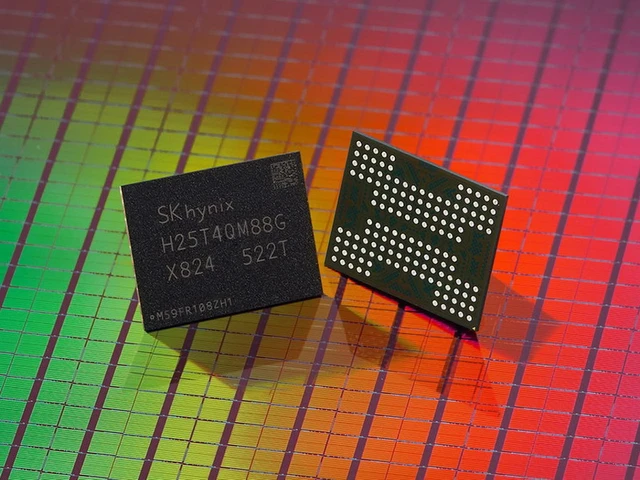
The technological roadmap is shifting toward the implementation of floating-gate 3D QLC NAND, focusing on the development of dies with over 200 active memory layers. For the industry, this represents a quantum leap: the ability to engineer ultra-high-capacity solid-state drives essential for processing Big Data and training large-scale neural networks. While these specialized solutions represent only a fraction of the overall NAND market, they are the primary drivers of technological leadership within the enterprise segment.
Alongside technical upgrades, SK hynix is orchestrating the financial frameworks necessary to sustain this growth. A focal point of this strategy is a potential IPO for Solidigm on the NASDAQ. By tapping into public equity markets, the company seeks to diversify its funding sources and build the capital reserves required for further expansion, reducing reliance on the parent corporation's internal resources. Consequently, the technical push in China is part of a broader financial maneuver designed to capitalize on intellectual property and manufacturing assets.
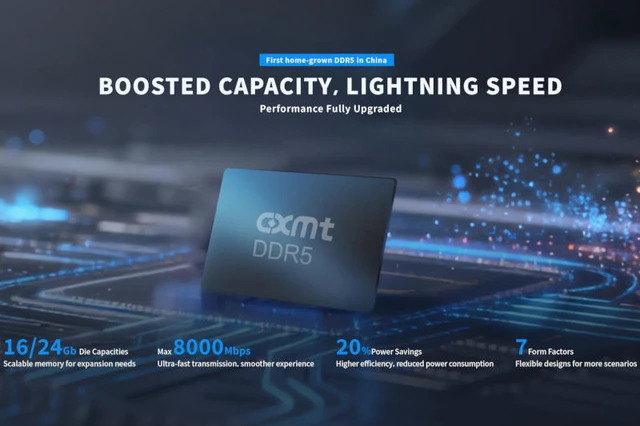 The Price of Acceleration: CXMT’s Rapid Push into Memory