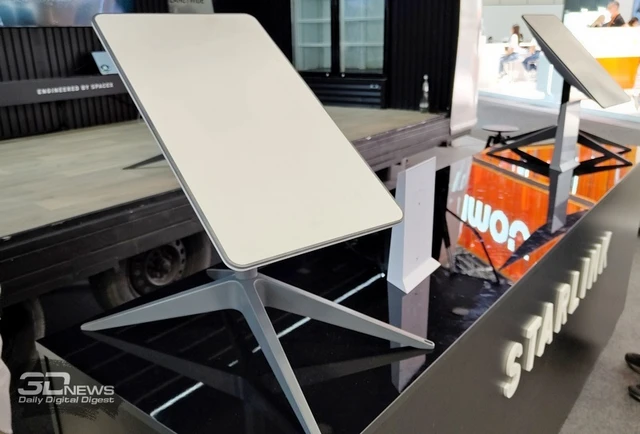
The transition toward fully autonomous transportation has evolved beyond a mere challenge of algorithms and sensors. Today, the pivotal factor is seamless connectivity—the bedrock for ensuring safety and fleet orchestration across every corner of the globe. The integration of satellite systems into Tesla’s new Cybercab underscores a strategic drive to decouple from terrestrial infrastructure. In doing so, the vehicle is reimagined: no longer just a means of transit, but a sophisticated node within a global information network.
The integration of a built-in Starlink antenna into the Cybercab initially sparked skepticism among industry experts. From a technical standpoint, Tesla's autonomous driving systems rely heavily on onboard computing power and real-time computer vision, rendering external data streams secondary to the actual act of navigation and vehicle control. However, recent confirmations and detailed imagery have firmly established this functionality within the device's specifications.
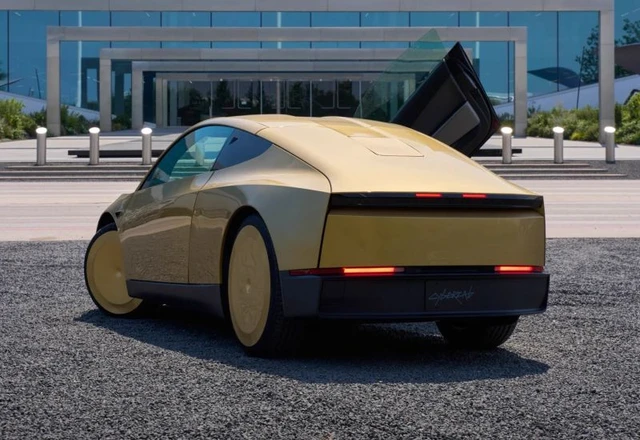
Examining the hardware architecture reveals a meticulous layout of components across the vehicle's roof. The satellite antenna sits alongside 5G terrestrial network modules, interior microphones, and an emergency stop system positioned directly above the passenger seats. Notably, the primary Starlink communication module is situated near the trunk lid, a design choice that optimizes aerodynamics while ensuring a stable signal.
The Cybercab is currently under development at Tesla's headquarters in Austin, Texas, where a limited fleet of autonomous taxis based on production Model Ys is already operational. The transition to a specialized two-seater—devoid of both steering wheel and pedals—marks a fundamental paradigm shift: Tesla is no longer merely adapting existing vehicles for autonomy, but is instead engineering a dedicated robotic mobility solution from the ground up.
Nevertheless, the inclusion of Starlink raises a compelling question regarding its utility in urban environments. In densely populated city centers characterized by high-rise architecture, satellite signals are prone to significant attenuation and shielding, making them largely ineffective for primary navigation.
More likely, we are witnessing a strategic move toward future-proofing. Integrating space-based connectivity allows the Cybercab to operate in remote regions where cellular coverage is either nonexistent or unstable. While charging infrastructure may be less developed in such areas, a guaranteed communication channel transforms the autonomous vehicle into a truly versatile asset, capable of operating independently of local telecommunications infrastructure.
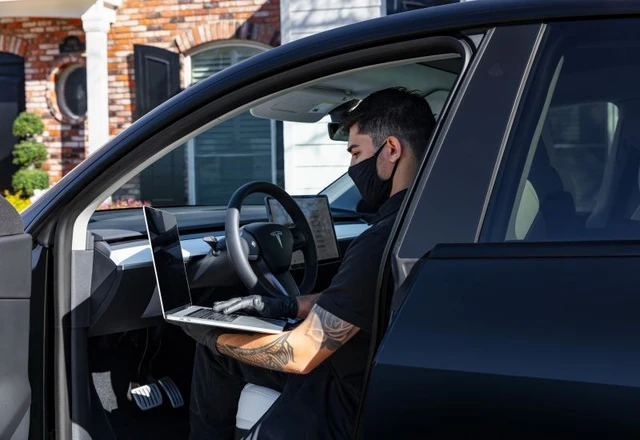 Driver Attention Monitoring in Tesla Electric Vehicles