The aerospace industry is pivoting from the paradigm of expendable spacecraft toward a model of sustainable orbital infrastructure. The deployment of the Mission Robotic Vehicle service module marks the dawn of an era defined by comprehensive technical maintenance for high-value assets in deep space. Life extension for satellites is no longer merely experimental; it has evolved into a systematic commercial operation. This strategic shift is fundamentally redefining the economics governing the operation of geostationary satellite constellations.
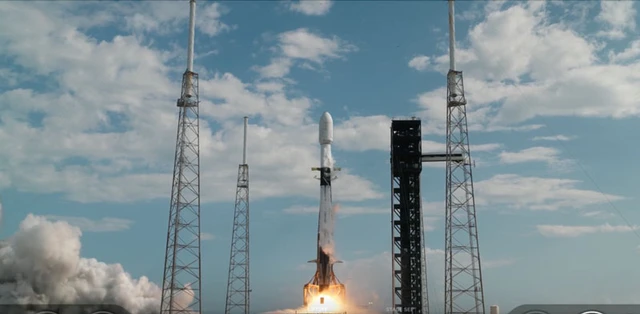
On July 21, 2026, a mission launched from Cape Canaveral's SLC-40 that fundamentally shifts the paradigm of space systems operations. A Falcon 9 rocket deployed the Mission Robotic Vehicle (MRV) alongside three accompanying Mission Extension Pods (MEP), engineered by SpaceLogistics. Notably, SpaceX eschewed its signature first-stage recovery; the substantial mass of the payload necessitated a fully expendable launch, signaling that mission criticality outweighed the company's usual drive for resource efficiency.
The MRV’s primary objective is to tackle the Achilles' heel of geostationary satellites: fuel depletion. When chemical propellants are exhausted, even a fully functional satellite becomes an expensive piece of orbital debris. The MEPs provide the solution—autonomous modules powered by xenon electric propulsion. The robotic servicer is designed to capture these pods and graft them onto a target spacecraft via the launch adapter ring originally used to secure the satellite to its carrier rocket.
Once mechanically docked, control of the module is handed over to the satellite operator through their own telemetry systems. A single pod can extend the operational life of a typical two-ton satellite by approximately eight years, assuming responsibility for station-keeping and attitude control. The first beneficiaries will be operators SES and Optus, whose telecommunications constellations are in urgent need of propellant replenishment.
This represents a significant technological leap from the previous Mission Extension Vehicle (MEV) iterations. While earlier models effectively "merged" with the client satellite in a permanent bond, the MRV is envisioned as a reusable orbital service hub. With a projected lifespan of 15 years, it is designed to service up to 30 different satellites.
At the heart of the system lies the RSGS robotic complex, developed by the U.S. Naval Research Laboratory with DARPA support. This suite features two three-meter manipulators, each boasting seven degrees of freedom to ensure surgical precision in the vacuum of space. A sophisticated vision system, comprising over 20 cameras, enables the robot to execute rendezvous and capture maneuvers even with "non-cooperative" targets that lack dedicated docking ports.
Full operational deployment will be a gradual process, with the MRV taking roughly a year to reach its station. This timeline is dictated by the use of electric propulsion for the ascent to geosynchronous orbit at an altitude of 36,000 kilometers. While highly efficient, these engines produce low thrust, making the transit a slow burn. For the final, agile phase of rendezvous and docking, the vehicle is equipped with an auxiliary refuelable chemical propulsion system.
Beyond mere propulsion augmentation, the MRV’s capabilities encompass orbital inspections, spacecraft relocation, and in-situ hardware upgrades. This marks a pivotal transition for the industry: moving away from disposable missions toward a permanent orbital service infrastructure, transforming the graveyard of defunct satellites into a dynamic ecosystem capable of repair and evolution.
 The iPhone Roadmap: Strategic Outlook through 2028