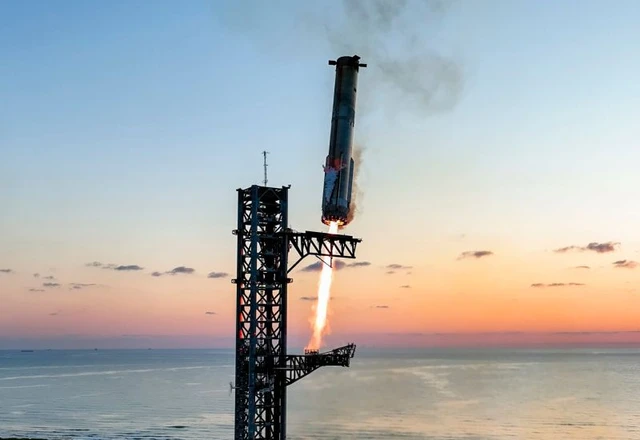
Modern astronautics is pivoting toward an era of rapid iterative testing, where each failure serves as the bedrock for the next breakthrough. SpaceX’s Starship system embodies this ethos, seeking to radically overhaul payload logistics for both orbital and deep-space missions. The transition to Version 3 marks a critical juncture in the evolution of the most powerful flight vehicle in human history. The upcoming test flight will serve as a rigorous stress test of the project's viability against a backdrop of formidable technical challenges and intensifying market pressures.
The trajectory toward a fully reusable launch system is seldom linear, and recent developments surrounding Starship only reinforce this reality. Following the forced rescheduling of its thirteenth test flight—a pivotal milestone for the updated V3 iteration—a new launch date has been set for Thursday, July 23. With this specific version having completed only one full-scale flight to date, every subsequent trial is critical to validating the system's theoretical performance specifications.
The tension surrounding the mission was heightened by the previous attempt, which was scrubbed in the final seconds of the countdown. While such incidents are inevitable in high-stakes aerospace engineering, the sheer scale of the Starship project means that technical glitches translate immediately into fiscal volatility. The sharp fluctuation in company valuation following the cancellation—resulting in a loss of approximately $100 billion in market capitalization—underscores the colossal expectations anchored to this program.
Technical post-mortems regarding the delay point toward necessary modifications in the thrust system. Within the broader development cycle that began in 2023 and has already spanned twelve launches of previous iterations, these adjustments are part of a standard "fail-fast" iterative process. Engineers are striving for maximum engine stability to minimize risk when hitting target operational regimes.
Flight 13 has a clear, pragmatic objective: validating payload deployment mechanisms. The vehicle will carry 20 Starlink telecommunications satellites, though their mission will be short-lived. For this specific test, the spacecraft will not be placed into a stable orbit; instead, they are designed to burn up in the dense layers of the atmosphere upon completion of the test program. This approach allows SpaceX to refine separation and positioning protocols without contributing to the proliferation of orbital debris.
The full-scale deployment of operational satellites via Starship is slated for later this year, which would mark a new chapter in the evolution of global internet connectivity. However, SpaceX’s strategic horizon extends far beyond mere communications logistics. Starship is envisioned as a universal tool for constructing large-scale space infrastructure, including orbital data centers and the logistical backbone for future crewed missions to the Moon and Mars. Consequently, every V3 launch is more than a technical trial—it is a calculated step toward transforming humanity into a multiplanetary species.
 BepiColombo’s Odyssey: At the Threshold of the Sun