The global semiconductor market is undergoing a tectonic shift, with energy efficiency emerging as the primary benchmark for survival. Qualcomm, a dominant force in the mobile sector for decades, is now launching a full-scale offensive into the server computing market. With the introduction of the Dragonfly lineup, the company aims to rewrite the rules of engagement, directly challenging the long-standing duopoly of Intel and AMD. This strategy signals a fundamental transformation for the giant, evolving from a smartphone chip supplier into a comprehensive architect of data infrastructure.
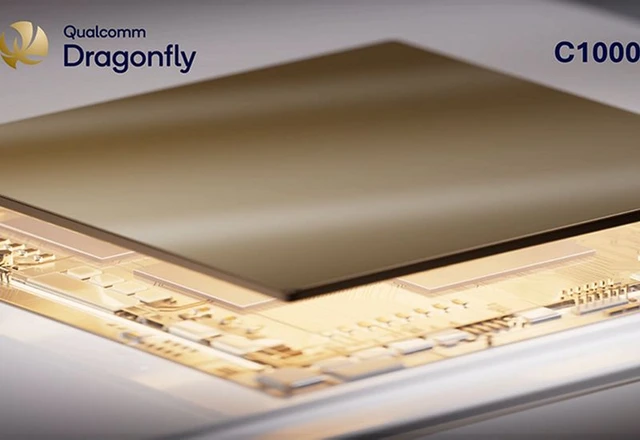
The contemporary data center landscape demands a fundamental paradigm shift in how we approach performance. In response, Qualcomm has unveiled its latest innovations: the Dragonfly C1000 server processors, engineered for agentic computing workloads for hyperscalers, and the Dragonfly AI300 specialized accelerators, designed specifically for inference—the execution phase of trained neural networks. These products serve as the cornerstone of a bold new financial strategy, with the company setting an ambitious target: reaching $15 billion in annual server segment revenue by 2029.
The scale of this expansion is staggering. For the upcoming fiscal year starting in October, Qualcomm expects to generate $5 billion from this sector, implying a tripling of its figures in just three years. To put these numbers into perspective, the quarterly server revenues of current leaders AMD and Intel hover between $5.1 billion and $5.8 billion. Consequently, Qualcomm is positioning itself to become a top-tier contender, offering a viable alternative to legacy x86 architectures.
However, servers are only one piece of a broader diversification strategy. The company aims to drive its annual non-smartphone revenue to $40 billion, with a significant portion—approximately $10 billion—expected to come from automotive electronics. Given that the total automotive semiconductor market is valued at $65 billion, Qualcomm is occupying a strategic vantage point, effectively transforming the vehicle into a "smartphone on wheels" powered by an onboard high-performance computing hub. The market has reacted optimistically to these blueprints; the company's shares surged, sparking a broader rally across the U.S. tech sector.
Qualcomm's primary edge in this race is its decades of expertise in developing mobile Systems-on-Chip (SoC). In an era where data center power consumption has become a critical bottleneck and energy shortages are hindering AI development, the ability to engineer ultra-energy-efficient silicon is a decisive advantage. By migrating its mobile "performance-per-watt" philosophy into the server rack, Qualcomm can substantially reduce the Total Cost of Ownership (TCO) for cloud providers.
The rollout of these plans will begin with the shipment of the Dragonfly C1000 in 2028, with Meta Platforms slated as one of the first strategic customers. Beyond its off-the-shelf offerings, Qualcomm has already secured agreements with two of the world's largest hyperscalers to develop semi-custom processors tailored to the specific workloads of their infrastructures.
Despite appearing as a late entrant to the fray, leadership views the current timing as ideal. The CPU market is facing a structural shortage, and the industry's pivot toward ARM-based architectures has opened a window of opportunity. Capturing significant market share requires more than just engineering prowess; it demands massive production and logistics scale—resources that Qualcomm possesses in abundance thanks to its dominance in the mobile sector.
 The Evolution of the Apple Home Ecosystem