The global semiconductor market currently finds itself at the epicenter of a fierce collision between the pursuit of technological supremacy and the constraints of geopolitical friction. Against this backdrop, Qualcomm is making a strategic pivot, attempting to transcend its long-standing hegemony in the mobile sector to carve out a foothold in data center infrastructure. The unveiling of the Dragonfly server lineup signals a calculated effort to re-engineer the company's business model for the era of generative AI. The central challenge now lies in navigating the precarious balance between strict adherence to U.S. export controls and maintaining access to the vast opportunities of the Chinese market.
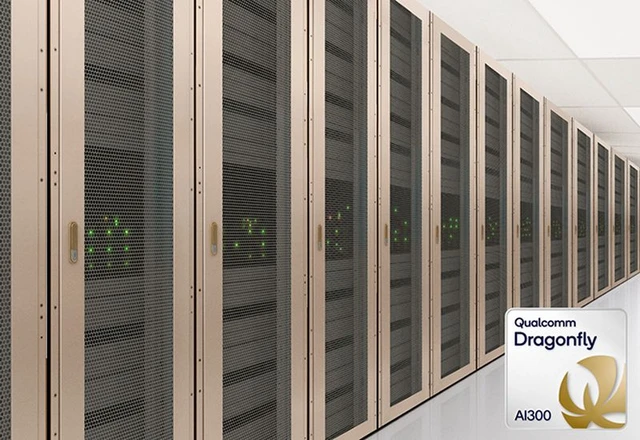
Qualcomm’s strategic pivot toward the server segment has crystallized with the introduction of the Dragonfly product family. This ecosystem spans four critical pillars: central processing units (CPUs), specialized AI accelerators, semi-custom silicon, and telecommunications infrastructure. Such diversification is a calculated move to decouple the company’s fate from the smartphone market, whose share of total revenue is projected to plummet from the current 57% to roughly one-third within the next few years.
The company is placing a significant bet on China, which accounted for nearly half of its total revenue last year. Navigating the complexities of U.S. export controls, Qualcomm has adopted a strategy of adaptation. Rather than withdrawing, the company intends to develop modified versions of its hardware, meticulously tailored to comply with legal restrictions. This approach allows Qualcomm to maintain deep ties with Chinese electronics and automotive giants, leveraging this foothold to penetrate the server computing space—a domain where China is currently a primary hub for the development of agentic AI models.
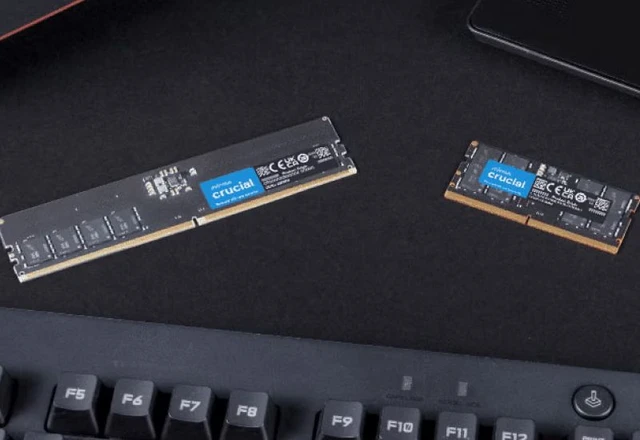
The technological bedrock of this expansion is the innovative HBC memory integration technology. In an industry where High Bandwidth Memory (HBM) has become the "gold standard" despite being plagued by power inefficiency and scarcity, HBC represents a radical departure. Qualcomm’s solution delivers a six-fold advantage in bandwidth per watt. This is more than a mere optimization; it is a paradigm shift in computational efficiency, enabling significantly larger memory capacities and overall system performance.
The first manifestation of this technology will be the AI250 accelerator, slated for release in the next fiscal year. To insulate itself from market volatility and supply chain disruptions, Qualcomm has already secured its memory pipeline through September 2027. The widespread adoption of HBC is expected to alleviate the global component shortage, a prospect that has already garnered intense interest from leading memory manufacturers.
The company’s financial ambitions are as aggressive as its technical roadmap. While server products are currently contributing a modest $300 million, revenue is expected to surge to $5 billion in the next fiscal year. Looking further ahead to 2029, the data center chip market is projected to reach the $1 trillion mark, and Qualcomm aims to capture at least a 5% share of this sector.
The execution of these plans relies on a seamless synergy with TSMC. The partnership with the Taiwanese giant is engineered to minimize the latency between final chip design and mass production. The ability to rapidly scale output into massive volumes is becoming Qualcomm’s decisive competitive edge in the high-stakes race for AI infrastructure leadership.
 The Evolution of the Apple Home Ecosystem