The global AI arms race has shifted its focus from algorithmic innovation to physical infrastructure. Today, the primary bottleneck for scaling neural networks is no longer just raw compute power, but access to massive energy reserves and specialized industrial facilities. Nvidia’s strategic pivot toward investing in infrastructure assets underscores a new industry reality: control over power grids has become as critical a determinant of success as the architecture of the chips themselves.
In today's hierarchy of technological dominance, owning cutting-edge GPUs is only one part of the equation. Realizing ambitious AGI-level projects requires specialized data centers capable of withstanding extreme thermal and power loads. This is precisely why Nvidia is expanding its footprint into infrastructure, investing up to $3 billion in Lancium.
The deal is structured around rigorous performance benchmarks. An initial tranche of $2 billion secures a 20% equity stake for the chipmaker. The remaining billion will be released only upon the achievement of specific operational milestones—the most critical being the successful connection of facilities to the power grid. This investment model demonstrates Nvidia's pragmatic approach: the company is not merely acquiring an equity stake, but is effectively hedging its future hardware deployments by guaranteeing the availability of sites where these systems can operate at full capacity.
Of particular interest is Lancium's asset portfolio, valued at approximately $10 billion. The centerpiece of this ecosystem is "Clean Campus," a massive facility spanning over 400 hectares in Abilene, Texas. This campus has become the bedrock for Project Stargate, an ambitious consortium uniting the resources of SoftBank, OpenAI, and Oracle.
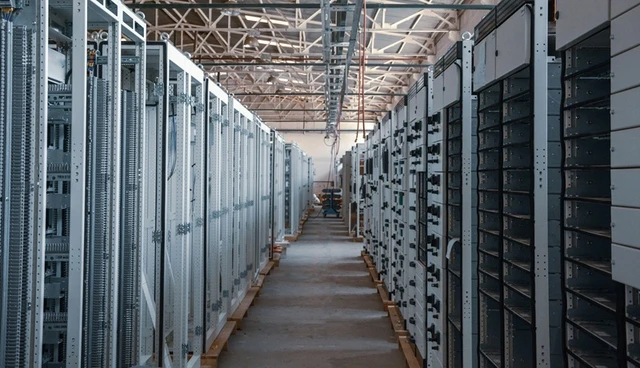
Lancium's evolution mirrors the broader metamorphosis of the high-performance computing (HPC) market. Only a few years ago, the company focused on cryptocurrency mining, which demanded immense energy consumption and specialized infrastructure. However, with the dawn of the Large Language Model era, the expertise in managing power-hungry installations has become an invaluable asset. The transition from crypto farms to AI infrastructure has allowed the company to rapidly adapt its existing capacity to meet the needs of hyperscalers.
In the long term, this alliance could pave the way for Lancium's entry into the public markets by 2027. For Nvidia, this move signals a strategic shift from being a component supplier to becoming the architect of the entire AI execution environment. By controlling the intersection of silicon and power, the company minimizes downtime risks and accelerates the global deployment of its systems.
 The Price of Acceleration: CXMT’s Rapid Push into Memory