The line between a professional workstation and a gaming handheld continues to blur, ushering in an era of ultra-high-performance portable systems. Today's market demands more than mere mobility; it calls for uncompromising power delivered within a compact form factor. The GPD Win Max 3 emerges as the definitive answer to this demand, seamlessly merging the capabilities of a desktop PC with the intuitive ergonomics of a handheld device. This machine signals a paradigm shift, establishing new benchmarks for computational power in the mobile space.
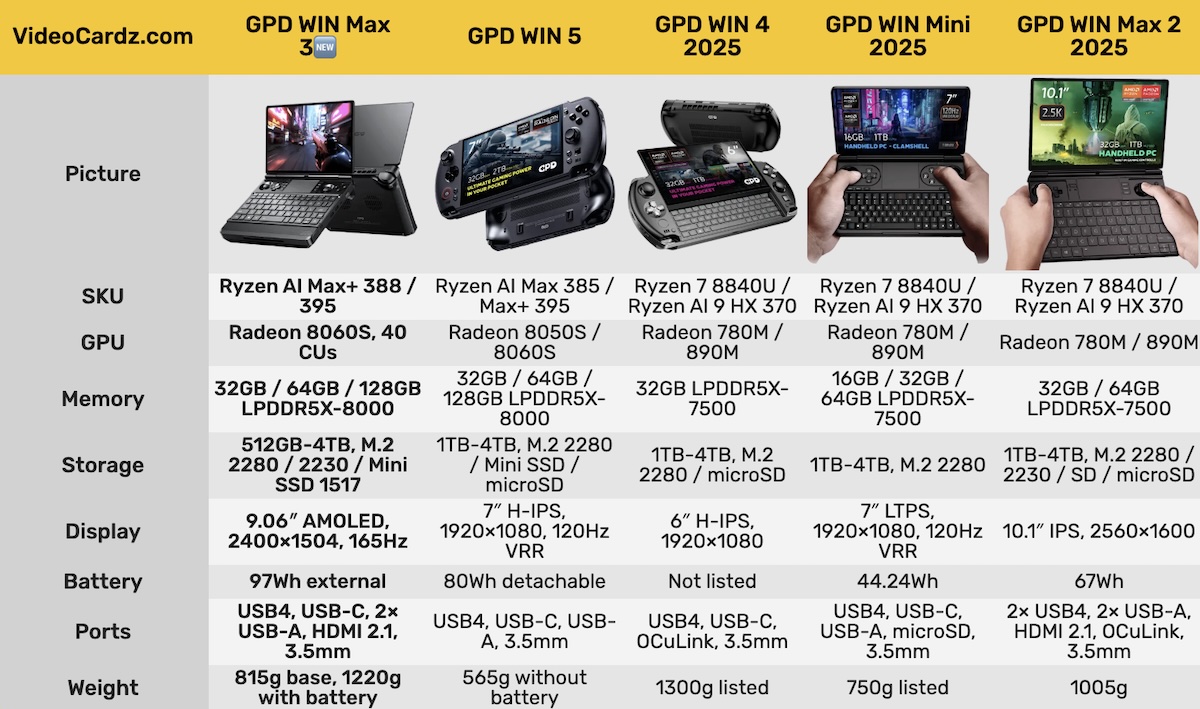
The Win Max 3 transcends the traditional boundaries of handheld gaming. It is not merely a console, but a comprehensive mobile workstation capable of tackling workloads that previously demanded cumbersome gaming laptops. At its core lies cutting-edge silicon from AMD—the Strix Halo series. Users can choose between the Ryzen Max+ 388, clocked up to 5 GHz, and the flagship Ryzen AI Max+ 395, which reaches 5.1 GHz.
Particular attention must be paid to the Radeon 8060S graphics subsystem based on RDNA 3.5. This architecture significantly narrows the divide between integrated and discrete graphics, delivering high frame rates in modern titles without the need for a bulky external GPU.

The device's technical capabilities are most striking in its memory capacity. Support for up to 128 GB of LPDDR5X-800 RAM transforms the Win Max 3 into a legitimate tool for heavy data processing or demanding software—a rarity in the handheld PC segment. Storage flexibility is achieved through a combination of three slots: M.2 2230, M.2 2280, and Mini SSD 1517, allowing for a total expanded capacity of up to 4 TB.
The ergonomics have been meticulously engineered for diverse use cases. In its base configuration, the dimensions are 207x147x34 mm; however, the design is modular. When installing the battery or an enhanced cooling system, the width expands to 180 mm. For those pushing for maximum TDP, an optional 110W cooling module is available to efficiently dissipate heat during peak loads. Energy autonomy is handled by swappable 97Wh battery modules, addressing the primary pain point of handheld systems: rapid drain under high-performance loads.
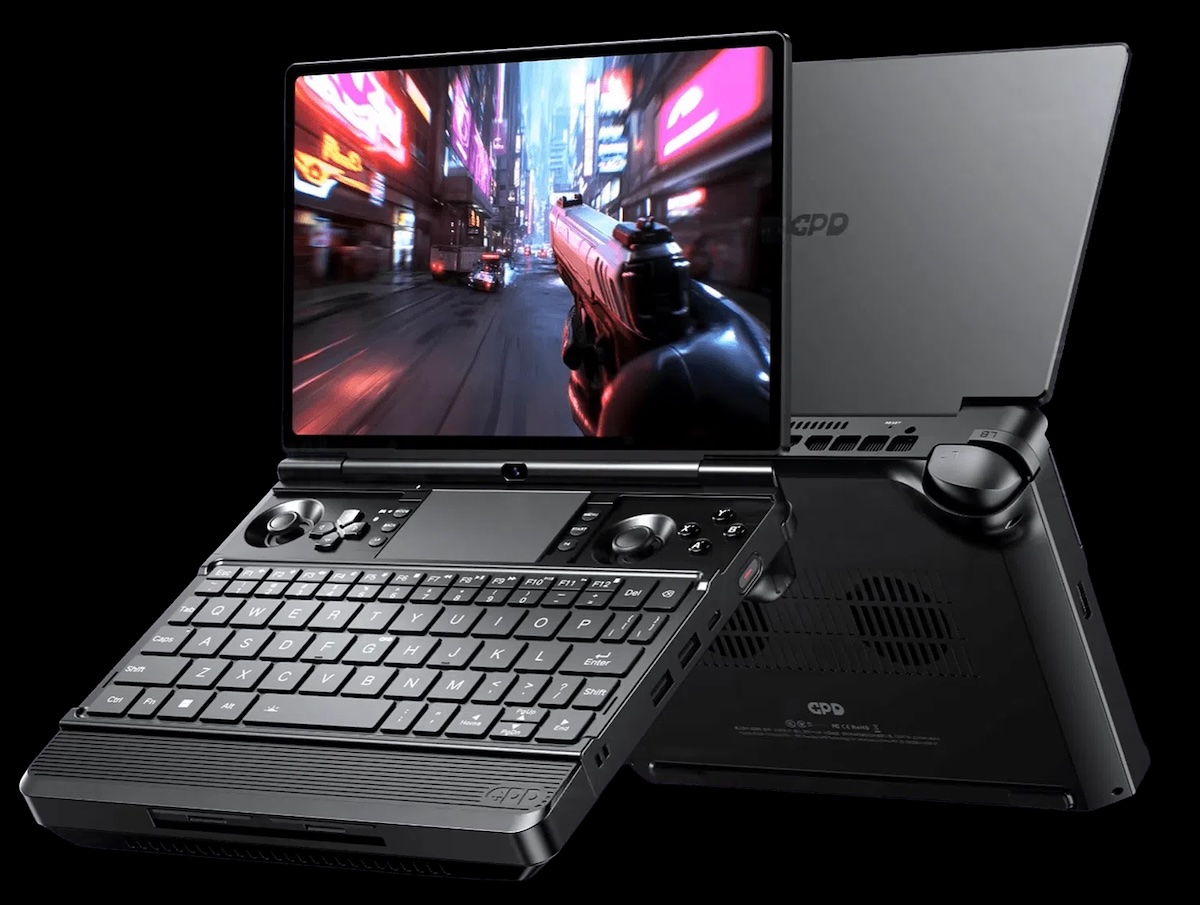
The visual experience is driven by a 9.06-inch AMOLED display. A resolution of 2400x1504, paired with a 165Hz refresh rate and a pixel density of 313 ppi, ensures a crisp and fluid image. With 105% DCI-P3 color gamut coverage and a peak brightness of 1050 nits, the screen is suitable not only for gaming but also for basic color grading or graphic design on the go.
The I/O suite of the Win Max 3 meets modern high-speed data transfer standards. A USB4 port with 40 Gbps throughput supports DisplayPort 2.1, enabling the connection of high-resolution external monitors without signal degradation. The port array is rounded out by HDMI 2.1, USB-C, and a classic USB-A 3.2 port, while wireless connectivity relies on current Wi-Fi 6E and Bluetooth 5.3 protocols.
System interaction is handled via a multi-tiered input array: a full keyboard and touchpad sit alongside dedicated gaming controls. Capacitive sticks and Hall Effect linear triggers with 4096 levels of sensitivity eliminate the drift issues common in traditional potentiometers. Completing the package are a wide-angle webcam, a fingerprint scanner, and an AAC audio system supporting DTS: X Ultra spatial sound.
The arrival of the Win Max 3 is the logical evolution of GPD's strategy to build a compact PC ecosystem. Following the debut of the Win Max 2 in 2022, the company steadily expanded its lineup, introducing the Ryzen AI 9-powered Win Mini and the potent Win 5 in early 2025. The Win Max 3 now completes this cycle, offering a perfectly balanced solution for those who require a single device to handle everything.
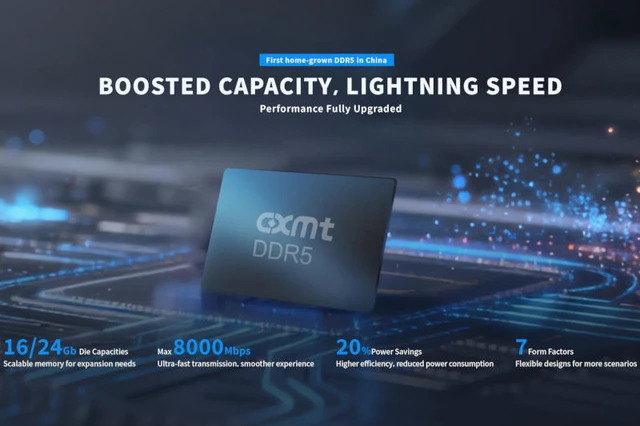 The Price of Acceleration: CXMT’s Rapid Push into Memory