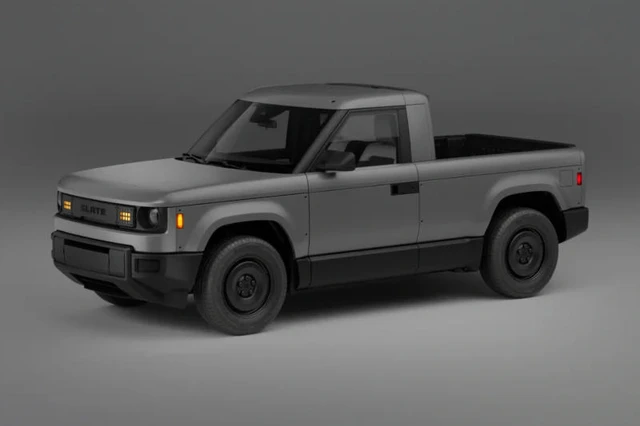
For years, the electric vehicle market has remained the exclusive domain of the luxury segment, leaving the mass consumer waiting for truly accessible solutions. Slate Auto’s introduction of a minimalist electric pickup was a bold attempt to disrupt this trend, aiming to deliver a utilitarian vehicle priced competitively with the used car market. However, external regulatory pressures forced the company to pivot its financial strategy on the eve of the official launch. The project now faces a critical challenge: maintaining the product's value proposition in the wake of scrapped government subsidies.
The pursuit of radical simplification in automotive design is often dismissed as a compromise, but for Slate Auto, minimalism has become its foundational philosophy. The company set itself an ambitious goal: to engineer an electric pickup accessible to the widest possible audience without sacrificing core functionality. Initial promises to keep the vehicle's cost under $20,000 created a powerful aura of anticipation, positioning the model as a symbol for the "democratization" of electric mobility.
However, market realities have intervened. Following the White House's decision to scrap the $7,500 federal tax credit—a subsidy that previously significantly lowered the final cost for consumers—Slate Auto was forced to recalibrate its pricing. The starting price now stands at $24,950. This jump serves as a stark illustration of how heavily the modern green-tech market remains tethered to government incentives and the shifting political landscape.
Despite the price hike, Slate Auto’s offering remains aggressively disruptive within the current U.S. market. For context, the average price of a traditional pickup in the States reaches $43,044, while a new electric vehicle averages $54,532. Even the secondary market remains strained, with used vehicles averaging around $26,918. Consequently, a brand-new Slate Auto electric pickup is cheaper than many pre-owned alternatives, creating a staggering price disparity in the manufacturer's favor.
The go-to-market strategy follows a phased rollout. Pre-orders are already live, with mass production slated for autumn 2026. During the first month, prospective owners can secure a priority delivery date for late 2026 by placing a non-refundable $300 deposit. Subsequent orders will be processed chronologically, which will inevitably push back delivery timelines.
The overwhelming interest in the model is reflected in the numbers: the company has already secured 180,000 pre-orders. This level of demand underscores a profound deficit of affordable electric transport and validates the viability of the "rational minimum" concept. Slate Auto has successfully identified a critical market pain point, where consumers are willing to trade excessive luxury for economic efficiency and environmental sustainability.
 The Evolution of Solid-State Batteries: From Smartphones to Electric Vehicles