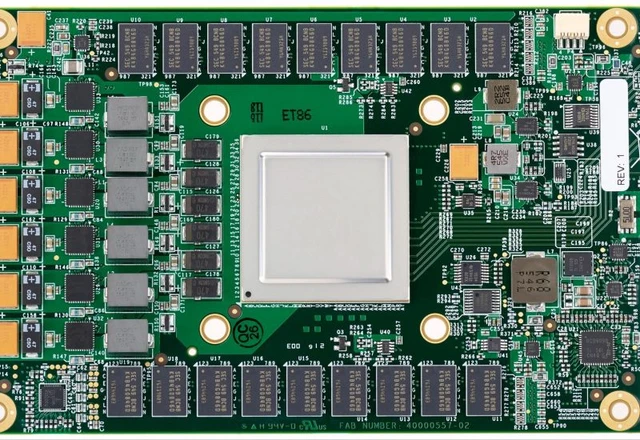
The transition to a 2nm process represents a pivotal milestone in the evolution of mobile computing; however, this technological triumph is colliding with the stark realities of global supply chains. Today, Apple's success depends less on the quality of its silicon than on its partners' capacity to secure critical volumes of RAM. This systemic imbalance has created a precarious bottleneck during the final stages of production, jeopardizing the timely release of the entire smartphone portfolio. At the heart of the crisis lies a widening disparity between processor fabrication throughput and the availability of essential packaging components.
The latest iteration of Apple’s A20 Pro silicon, engineered on TSMC’s cutting-edge N2 (2nm) process, is a technical triumph. Fabrication is proceeding according to plan across Fab 20 in Hsinchu and Fab 22 in Kaohsiung, with the latter serving as the primary production hub for Apple. However, this architectural perfection has hit a wall: a severe logistics crisis has brought production to a virtual standstill at the packaging stage due to an acute shortage of DRAM.
The bottleneck centers on the implementation of Wafer-Level Multi-Chip Module (WMCM) technology. Essentially a mobile adaptation of the CoWoS (Chip-on-Wafer-on-Substrate) system, WMCM allows the processor and RAM to be integrated into a single, high-efficiency module. This integration is critical for reducing power consumption and maximizing memory bandwidth—capabilities that are non-negotiable for running complex on-device neural networks. While pilot lines at Advanced Packaging Fab 3 are finalizing their testing phase, the bulk of production is slated to migrate to the AP7 facility in Chiayi.
The crisis is compounded by the fact that demand for N2 capacity is so overwhelming that production queues are fully booked through the end of next year. Yet, while the processors themselves are flowing smoothly, DRAM supplies from Micron, Samsung, and SK hynix have failed to keep pace with wafer throughput. This has created a paradoxical scenario: TSMC is currently sitting on approximately $1 billion in "unpacked" A20 Pro dies. These chips have effectively become dead stock, idling while they await integration with memory modules. The average dwell time for these inventories has climbed by seven days, reaching a critical threshold of 87 days.
This congestion inevitably ripples down to the final link in the chain: device assembly in China, handled by Foxconn and BYD. The shortage of finished Systems-on-a-Chip (SoCs) is narrowing the window for production ramp-up, creating a tangible risk of stockouts for specific iPhone models during the critical first weeks of launch.
Apple’s strategy for this cycle envisions a total volume of 200 million units, spanning the standard iPhone 18, the Pro version, and the ambitious foldable iPhone Ultra. The latter, with a price point exceeding $2,000, is positioned as a high-margin niche product, expected to account for less than 10% of total shipments. The remainder of the market will be split evenly between the base model and the Pro. However, the viability of this roadmap now rests entirely on how quickly memory suppliers can resolve the DRAM deficit to unlock the billion-dollar backlog of semi-finished silicon at TSMC’s plants.

 The Price of Acceleration: CXMT’s Rapid Push into Memory