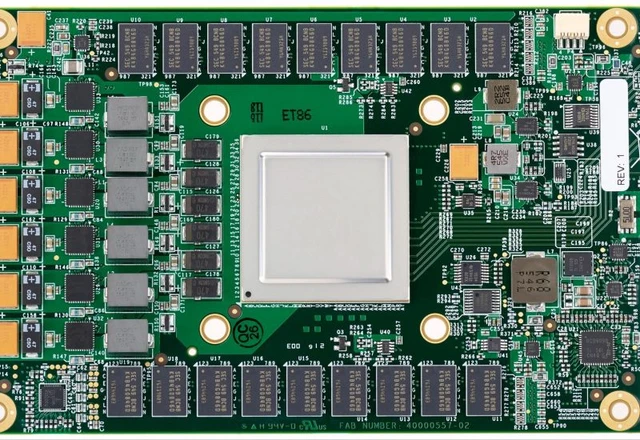
The global race for AI supremacy has decisively shifted toward the hardware layer. Seeking to diversify its supply chain and mitigate vendor lock-in, Google is placing a strategic bet on Marvell Technology. This partnership signals a pivot from transactional procurement toward deep financial and technological integration. At the heart of this collaboration is the evolution of Tensor Processing Units (TPUs), which are becoming the foundational architecture for scaling next-generation neural networks.
The specialized computing market is currently undergoing tectonic shifts. Google, which spent years building its ecosystem around Tensor Processing Units (TPUs), is pivoting its approach to silicon development. A new agreement with Marvell Technology signals the tech giant's intent to diversify its pool of partners responsible for chip design and memory controllers. While Broadcom has long been Google's primary partner—and their contract was renewed this April—the entry of Marvell into the pipeline introduces a necessary balance of power and fosters healthy competition within the project.
What distinguishes this deal is its unconventional financial structure, which analysts describe as "circular." This is more than a mere development contract; it is a long-term investment commitment. Google has secured the right to acquire Marvell shares totaling $12.2 billion through fiscal year 2033. The execution mechanism is strictly pragmatic: share purchases will occur in stages, with each tranche tied to Google's actual expenditures on chips developed in collaboration with Marvell. Consequently, the developer's financial success is directly linked to the efficiency and scalability of the hardware produced.
This approach creates a powerful synergy. For Marvell, it guarantees a steady influx of capital and the status of a strategic partner to one of the AI market's dominant players—a move already reflected in the company's valuation, with shares surging nearly 14%. Conversely, the market reacted cautiously to the potential erosion of Broadcom's monopoly, seeing its shares dip. Taiwan's MediaTek, also involved in TPU development, remains within this strategic orbit, and AMD may be brought on board in the future, effectively transforming Google's processor development into a consortium of the industry's premier engineering talent.
The economic trajectory of this partnership is impressive. Revenue from Google's TPU-based infrastructure is projected to climb from the current $3 billion to $25 billion by 2027. For Marvell, the planning horizon is even more expansive: cumulative revenue from its engagement with Google could reach nearly $120 billion by 2033. This underscores a fundamental transformation: TPUs are evolving from internal optimization tools into a formidable commercial asset capable of generating massive revenue streams.
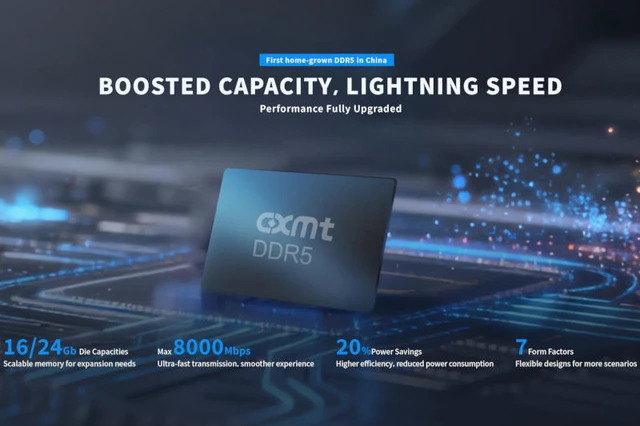 The Price of Acceleration: CXMT’s Rapid Push into Memory