The global AI arms race has long since shifted from a battle of algorithms to a struggle for physical control over hardware. The United States is aggressively seeking to curtail the access of Chinese tech giants to cutting-edge accelerators, effectively transforming global supply chains into a geopolitical battleground. In this climate, Southeast Asia has emerged as a critical nexus, where legitimate transit frequently serves as a facade for "gray market" procurement schemes. A recent incident in Malaysia vividly illustrates the increasing sophistication of the tactics used to circumvent export controls.
The contemporary high-performance computing (HPC) landscape has transformed into a geopolitical battleground, where access to next-generation chips is treated with the same gravity as the possession of a strategic natural resource. Under the weight of stringent export restrictions imposed by Washington, China has been forced to engineer alternative procurement channels to secure the hardware essential for training large language models (LLMs) and advancing state-led AI initiatives. The primary mechanism for this is "grey market" imports facilitated by intermediary nations—countries that formally adhere to regulations while practically serving as transit hubs.
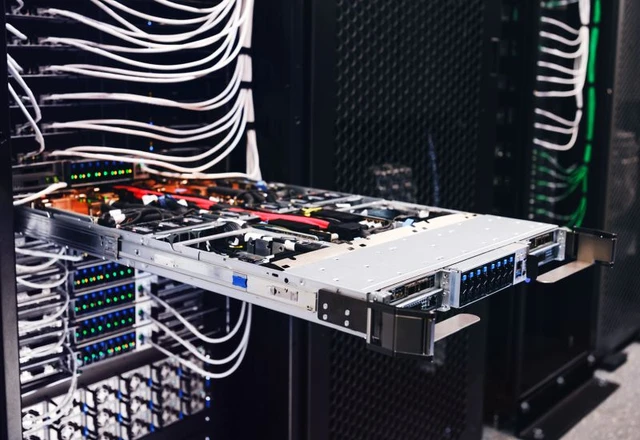
Malaysia, a long-standing linchpin in the global electronics assembly chain, recently became the epicenter of one such breach. Authorities at Kuala Lumpur International Airport intercepted a shipment of 72 server systems equipped with cutting-edge AI accelerators, with the total cargo value estimated at $13 million. The attempt to obfuscate the equipment's true destination was rudimentary: shipping documents listed the systems as generic computer components destined for the Malaysian domestic market. However, an investigation revealed that the hardware was intended for immediate re-export to another Asian nation, representing a direct violation of both national law and international export control mandates.
This incident underscores a systemic failure in high-tech export oversight. Despite the formal prohibitions Malaysia implemented last year under pressure from the United States, evasion mechanisms continue to operate through a sophisticated network of local shell companies. In this specific case, one such entity has already been brought under investigation, and the entire shipment has been confiscated.
Yet, the physical seizure of servers is merely the tip of the iceberg. Chinese tech players have adopted a more nuanced strategy: rather than risking the physical import of "iron" into their own territory, they are deploying compute capacity directly within friendly or neutral jurisdictions. In this model, the servers physically remain in Malaysia, but are utilized by Chinese developers via remote access. From the perspective of local law, such operations often remain legal, creating a massive loophole in the current sanctions regime.
Parallel trends are emerging in Singapore, traditionally one of the region's premier logistics hubs. U.S. intelligence agencies regularly flag attempts to illegally transit Nvidia accelerators through the city-state, a trend that has already led to the arrest of several Chinese nationals suspected of orchestrating complex supply chain schemes.
Curiously, Southeast Asian airports have increasingly become crossroads for diverse forms of contraband. Alongside the interception of high-tech servers in Kuala Lumpur, authorities discovered a shipment of illicit substances disguised as vape liquid, concealed within processor packaging. This suggests that the delivery channels for prohibited goods—ranging from narcotics to strategic AI hardware—often exploit the same vulnerabilities in customs control.
Ultimately, the struggle for silicon has devolved into a perpetual game of cat-and-mouse. As restrictions tighten, the methods of evasion grow more sophisticated, transforming ordinary freight terminals into the front lines of a global technological war.

 The Evolution of the Apple Home Ecosystem