The global race to conquer low Earth orbit is rapidly shifting from a theater of geopolitical ambition to one of commercial viability. While Western markets have long since integrated private sector participants, India is now making a strategic leap toward establishing its own autonomous aerospace ecosystem. The successful deployment of a launch vehicle by Skyroot Aerospace signals the dawn of a new era for the South Asian region; India has officially joined the elite ranks of nations capable of executing orbital missions powered by private capital.
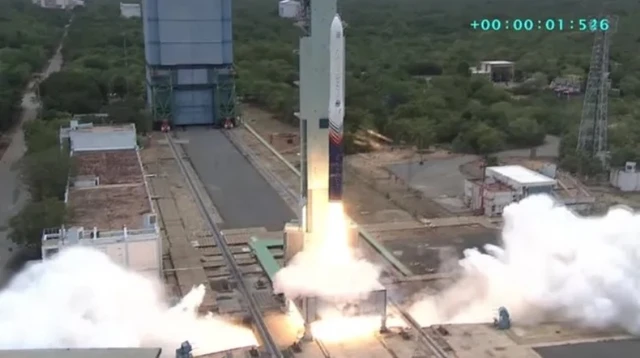
The recent milestone achieved at the Satish Dhawan Space Centre in Sriharikota marks the culmination of years of relentless effort by Indian engineers and entrepreneurs. The Aagaman mission, spearheaded by Skyroot Aerospace, was far more than a mere technical experiment; it served as a definitive demonstration of the technological maturity of India's private space sector. Just fifteen minutes after liftoff, the Vikram-1 launch vehicle successfully deployed its payload into an orbit 450 kilometers high, validating the operational integrity of all critical systems.
Technically, the Vikram-1 is a masterclass in balancing power with compactness. Standing 22 meters tall, the rocket is capable of delivering up to 350 kg of payload to Low Earth Orbit (LEO), positioning it as an ideal vehicle for deploying small satellite constellations. Architecturally, the launcher relies on three solid-fuel stages; however, the most compelling component is its liquid orbital correction module. At its core lies an engine developed via additive manufacturing (3D printing)—a strategic choice that significantly slashes production timelines while optimizing internal cooling and propellant feed channels.
During the Aagaman mission, Skyroot Aerospace focused not only on delivering commercial payloads but also on rigorous stress-testing of onboard systems. Guidance, Navigation, and Control (GNC) algorithms were validated in real-time, alongside the performance of electronics operating within the harsh environment of a space vacuum. These data points will serve as the bedrock for transitioning from sporadic test flights to a consistent, commercial launch cadence.
The trajectory of Skyroot Aerospace mirrors the global surge in "deep tech" startups. Founded in 2018, the company rapidly captured international investor interest, achieving unicorn status with a market valuation of one billion dollars in record time. This ascent underscores the market's confidence in Indian engineering talent and the nation's capacity to develop high-tech products that are globally competitive.
By achieving orbital capability through a private entity, India becomes the third nation in the world to possess such capabilities, significantly diversifying the global launch services market. Amidst the escalating demand for microsatellites and remote sensing data, the emergence of a new, agile player is poised to drive down the cost of space access and accelerate the planet's digital transformation.
 Memory Shortages Drive Up Smartphone Prices