Effective thermal management of modern GPUs has long been paramount to ensuring hardware stability and longevity. For years, users have relied on aggregate temperature metrics, remaining blind to the actual heat distribution across individual memory modules. However, rigorous technical analysis has uncovered the existence of hidden sensors capable of monitoring the thermal state of every single chip. This revelation unlocks new avenues for the precision diagnostics of cooling solutions and the fine-tuning of high-performance GPU operations.
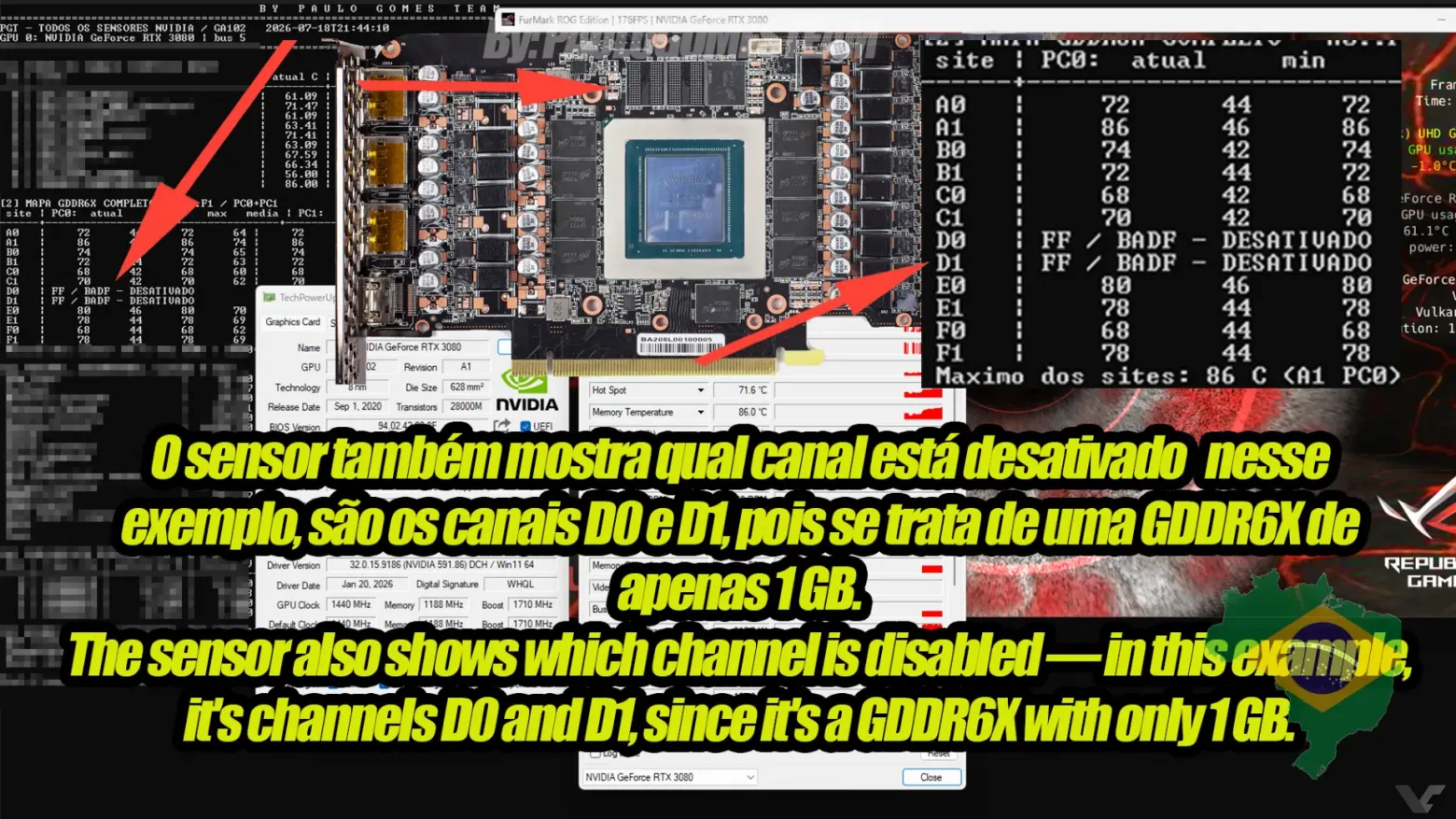
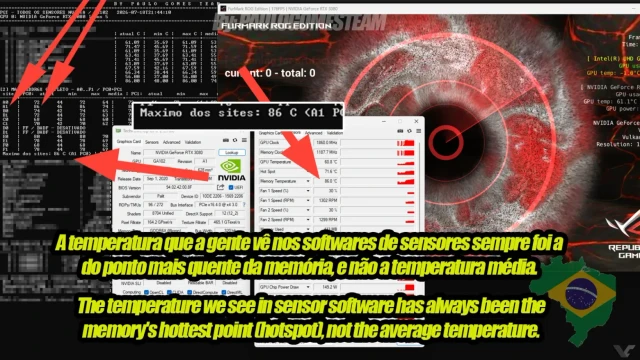
Under the hood of contemporary Nvidia GPUs featuring GDDR6 and GDDR6X memory lies a sophisticated monitoring system that the company has kept officially under wraps. Access to this data was achieved by analyzing Memory-Mapped I/O (MMIO) registers, enabling the extraction of hidden telemetry directly from the hardware level. Previously, most mainstream monitoring utilities displayed a single memory temperature value—one frequently mistaken for an average across all modules. In reality, this figure represented the temperature of the hottest chip: the so-called "hotspot."
The unlocking of individual sensors has provided a transparent view of thermal distribution. Testing flagship solutions, such as the GeForce RTX 3080, revealed that memory chip heating is often uneven. Instances where a single module hits a critical 86°C while others remain significantly cooler serve as clear evidence of physical contact issues. Such temperature variances typically point to defective thermal pad compression or improper water block installation, rendering this new functionality an indispensable tool for professional modding and technical servicing.
Integrating these capabilities into the software ecosystem necessitated a comprehensive overhaul of existing monitoring tools. Driven by enthusiast community efforts, detailed memory telemetry has been integrated into HWiNFO beta builds and implemented via specialized plugins for MSI Afterburner. Users can now track the thermal dynamics of each individual module in real time, allowing for far more precise stress testing and cooling system optimization.
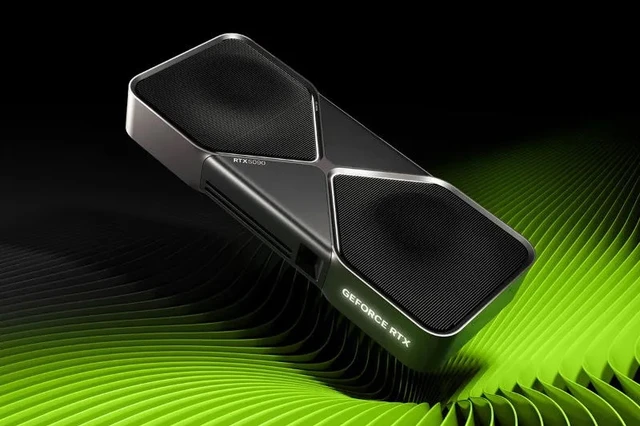
Notably, this approach to monitoring has persisted into the latest hardware iterations. Analysis of the GeForce RTX 50 series with GDDR7 memory reveals the presence of similar hidden sensors. This suggests that deep telemetry is a fundamental pillar of the Blackwell architecture's internal design, even if it remains inaccessible to the average user out-of-the-box. Such a diagnostic approach underscores the complexity of modern memory systems, where even a minor thermal imbalance can lead to component degradation or instability when operating at high frequencies.
 Energy Autonomy: The Extreme Edition