The automotive industry is undergoing a paradigm shift, where ownership of the physical vehicle is becoming little more than an entry point into a sprawling ecosystem of services. General Motors is redefining its market position, pivoting from a legacy hardware manufacturer to a provider of high-margin software solutions. In an era of electric vehicles—where mechanical maintenance is minimal—digital subscriptions have emerged as the primary driver of financial sustainability. This strategy fundamentally reshapes the relationship between brand and driver, effectively transforming the automobile into a perpetually updating gadget.
The contemporary automotive industry is grappling with a fundamental paradox: the transition to electrification, while hailed as a technological triumph, is effectively eroding traditional dealership profit centers. Electric motors are significantly simpler than internal combustion engines; they eliminate the need for routine oil changes and complex mechanical servicing, stripping manufacturers of a steady stream of after-sales revenue. In response, General Motors is pivoting toward the concept of the Software-Defined Vehicle (SDV)—a paradigm where a car's capabilities are dictated by code rather than physical hardware alone.
The economic allure of this shift is staggering. While vehicle sales yield modest margins—typically between 4% and 10% per dollar of revenue—the software development division boasts profitability levels as high as 70%. This transformation elevates software from a supporting tool to the primary driver of market capitalization.
The cornerstones of this strategy are OnStar and Super Cruise. OnStar, providing safety, GPS navigation, and connectivity, continues to show steady growth; in the second quarter of 2026, its revenue reached $800 million, a 20% increase year-over-year. GM aims to scale its active subscriber base to 13 million, cultivating a resilient community of brand loyalists.
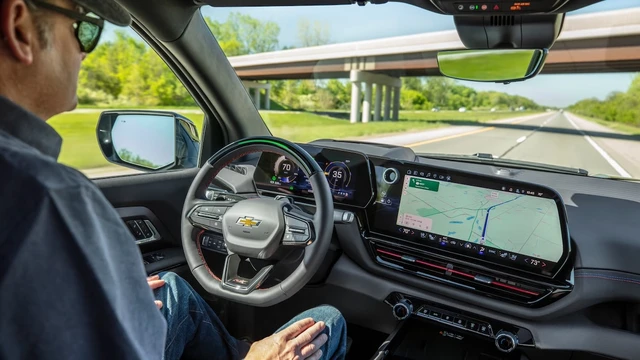
Super Cruise represents an even more sophisticated and promising frontier—a semi-autonomous driving system that allows drivers to temporarily take their hands off the wheel. The growth trajectory here is even more aggressive: over the last three months, GM has attracted 70,000 new subscribers, with total service revenue surging 70% compared to the same period last year. Of particular interest is the retention rate: 30% to 40% of users continue their subscriptions after the free trial expires, signaling genuine consumer value.
This architecture enables GM to deploy new features via over-the-air (OTA) updates, bypassing the need to wait for the next model cycle. The vehicle ceases to be a static product; it evolves throughout its lifecycle. For the consumer, this means instant access to cutting-edge technology; for the company, it creates an opportunity to monetize every high-value feature added.
GM is not alone in this pursuit. The entire industry is shifting toward recurring revenue models. Tesla, the pioneer of this trend, pivoted from a one-time $8,000 fee for its Full Self-Driving (FSD) system to a monthly subscription of $100. Ford has followed suit with BlueCruise, offering a choice between monthly payments and a lifetime license. European giants Mercedes-Benz and BMW are similarly integrating paid updates for autonomous features.
GM’s pricing strategy for 2025 appears strategically calibrated: the basic OnStar package is provided free of charge for eight years to instill user habituation. Simultaneously, premium access via Connect Plus and Super Cruise carries monthly fees of $20 and $40, respectively.
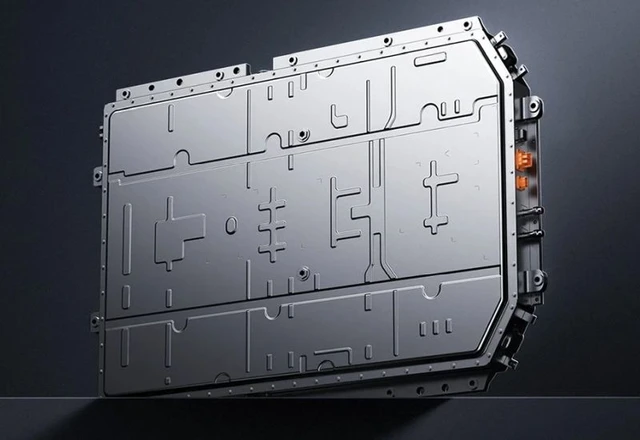
Parallel to its digital transformation, General Motors is expanding its horizons beyond automotive manufacturing into energy storage systems for data centers. This underscores a broader ambition: the company is evolving into a technology conglomerate where data and energy management take precedence over vehicle assembly. Meanwhile, internal optimization remains ruthless—the deployment of robotic manipulators at the Detroit plant has been accompanied by workforce reductions, confirming that automation now takes priority over manual labor.
 Dragonscale’s Radical Battery Warranty