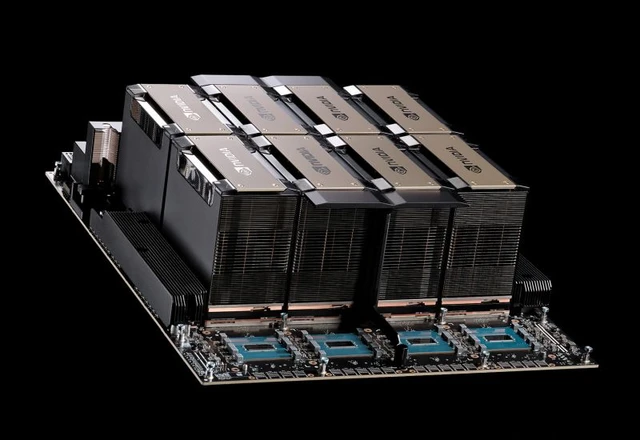
The global AI arms race has evolved into a brutal battle of computational power, where access to cutting-edge silicon dictates the velocity of technological advancement. For years, a combination of stringent US export controls and China's drive for domestic substitution created an artificial scarcity of high-performance systems. Yet, pragmatism has ultimately triumphed over ideology, prompting Beijing to pivot toward a more flexible approach regarding the procurement of American technology. Now, Nvidia’s H200 accelerators have emerged as the pivotal instrument for bridging the critical divide in neural network development.
The geopolitical standoff over semiconductors has entered a new phase. While discussions regarding the lifting of export restrictions on Nvidia H200 accelerators have been occurring at the highest levels of the US government since late last year, actual access for the Chinese market only materialized in July. The decisive factor was a shift in the stance of Chinese regulators: whereas the priority had previously been a rigid drive toward import substitution, the imperative to close the gap with Western leaders in generative AI has now taken center stage.
As a result of this strategic pivot, supply volumes have begun to climb, reaching tens of thousands of units. The primary beneficiaries have been tech giants ByteDance and Tencent, each securing 10,000 H200 accelerators. It is expected that similar opportunities will soon open up for other major players in the Chinese tech sector.
This process, however, is far from unrestricted and is burdened by significant administrative and technical constraints. First, a strict cap has been implemented: no single company may acquire more than 100,000 American accelerators. Second, a substantial portion of this capacity must be operated outside mainland China. In effect, H200s are being procured for deployment in overseas data centers (DCs) that service the computational needs of Chinese corporations.
Hong Kong plays a pivotal role in this scheme, as it is viewed as "foreign territory" by Chinese officials. Although US licenses permit the supply of H200s to both mainland China and Hong Kong, the latter faces severe infrastructure bottlenecks. The current state of power grids and a shortage of ready-to-use data center sites prevent the rapid scaling of computing power, even when the necessary silicon is available.
The scale of potential demand is staggering: reports suggest Nvidia has earmarked a reserve of approximately 500,000 H200 accelerators for its Chinese clients, although current delivery rates remain significantly more modest. Lenovo is also signaling a resurgence in activity, having already begun notifying clients that it is ready to accept orders for server equipment integrated with H200s.
It is crucial to understand the deep technical underpinnings of this compromise. In the modern AI hierarchy, there is a clear distinction between model training and inference (the actual application). American chips remain unrivaled during the heavy training phase of Large Language Models (LLMs), which demands colossal memory bandwidth and compute density. Meanwhile, domestic Chinese developments are already demonstrating respectable results in inference tasks. Consequently, a hybrid strategy is emerging: leveraging Western technology to forge the "intelligence" and utilizing domestic resources for its day-to-day operation.
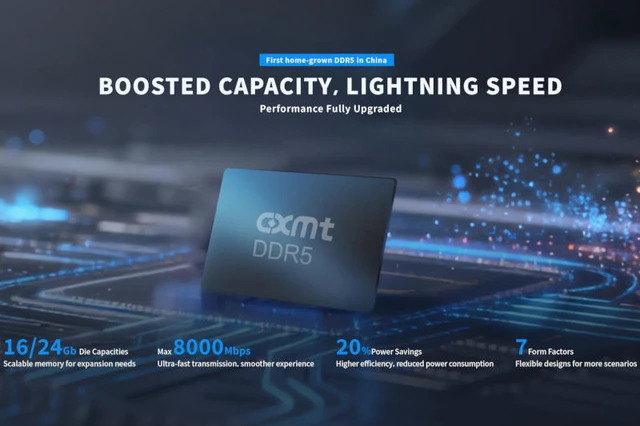 The Price of Acceleration: CXMT’s Rapid Push into Memory