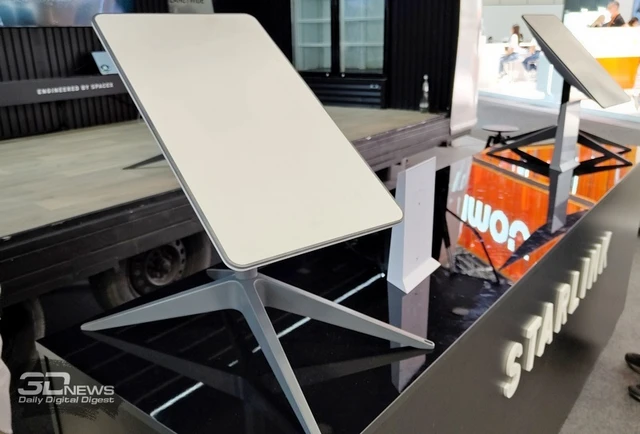
The global race for satellite connectivity has evolved beyond mere commercial expansion, shifting decisively into the realm of geopolitical security. In an era dominated by private titans such as SpaceX, reliance on a single corporate provider has emerged as a critical vulnerability for government institutions. Recognizing this fragility, Europe has pivoted toward establishing its own autonomous infrastructure—one capable of ensuring seamless, uninterrupted connectivity independent of external pressures. The IRIS² project now serves as the cornerstone of this pursuit of digital sovereignty, transitioning from conceptual planning to full-scale operational deployment.
The European Commission and the European Space Agency (ESA) have effectively concluded months of negotiations, establishing a detailed deployment roadmap for the IRIS² constellation. This is more than a mere technical exercise in satellite launches; it is a strategic bid to establish a closed-loop communication network designed to ensure Europe's strategic autonomy. The agreement, uniting leading European manufacturers and state entities, encompasses the system's entire lifecycle—from spacecraft design to ground infrastructure and launch logistics.
A central pillar of the updated plan is system scalability. Initial projections have been revised upward: the constellation will now comprise 348 satellites, an increase of 66 units over the original blueprint. This expansion is driven by stringent national security and defense requirements. According to ESA, these additional capacities will enhance government security capabilities within the EU by 60% and globally by 54%. Such capabilities are critical for coordinating emergency services and managing missions during crises, particularly when traditional communication channels are compromised or disabled.
Comparing IRIS² to Starlink based solely on satellite count would be a methodological fallacy. While Elon Musk’s network is a massive commercial venture aimed at mass-market broadband access, the European initiative pursues fundamentally different objectives. IRIS² is being engineered as a secure instrument for government institutions across EU member states, Norway, and Iceland. In essence, it is the creation of a "government cloud" in Low Earth Orbit (LEO), where the priority shifts from content download speeds to cryptographic resilience, reliability, and absolute administrative control over traffic.
However, the project is not limited exclusively to the public sector. In the long term, the system will be opened to businesses and private individuals, particularly in regions where terrestrial infrastructure is either non-existent or unstable. Consequently, Europe is constructing a multi-tiered ecosystem: ranging from ultra-secure channels for intelligence services to basic connectivity for remote territories.
The first satellites are slated for orbit by 2029, marking the commencement of actual service delivery. This distant horizon underscores the sheer complexity of the undertaking: building a sovereign network requires not only immense technical resources but also surgical political coordination among numerous participating nations striving toward a shared technological shield.
 The Phenomenon of the Supermassive Galaxy IC 1101