The geopolitical rivalry between the United States and China has decisively shifted toward a battle for technological sovereignty and dominance over the skies. The U.S. Federal Communications Commission (FCC) is currently revisiting stringent restrictions on the import of Chinese drones, attempting to draw a fine line between professional-grade hardware and consumer-grade toys. This move underscores Washington's struggle to strike a delicate balance between market dynamics and the imperatives of national security. At the heart of the debate lies a critical question: at what precise point does a consumer gadget evolve into a potential tool for espionage?
The technological divide between the world's two largest economies is crystallizing, transforming ordinary consumer electronics into matters of national security. The U.S. Federal Communications Commission (FCC) has announced a partial easing of its policy regarding Chinese drones, though this concession is strictly limited in scope. While professional-grade systems remain under a stringent ban, the market may see a return of basic models classified as "toys."
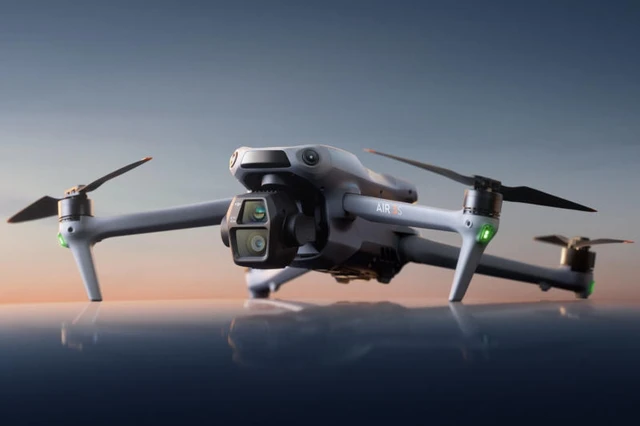
Previously, the FCC maintained an uncompromising stance, blocking the import of new drone models and critical components from industry leaders such as DJI and Autel. The agency's logic was unequivocal: high-tech UAVs possess the potential to collect and transmit sensitive data, creating unacceptable risks to state security.
This policy pivot follows a detailed analysis conducted by the Pentagon. The defense department concluded that "low-risk toys" lack the inherent capabilities that render professional drones dangerous. Specifically, these devices lack significant flight range and endurance, advanced payload sensors, and robust communication and data storage capabilities.
To prevent the possibility of espionage equipment being disguised as children's playthings, the FCC has established a rigorous technical regulatory framework. To be classified as a "toy," a device must meet the following cumulative criteria:
— The device mass must not exceed 150 grams;
— Maximum flight range is limited to 100 meters within visual line-of-sight;
— A total absence of networking functions and internet connectivity;
— A ban on the installation of photo and video cameras, as well as any sensors capable of data collection;
— Battery life must not exceed 10 minutes.
These parameters effectively reduce the device's functionality to primitive entertainment, stripping it of any practical utility for intelligence gathering or industrial espionage.
However, this initiative is merely one component of a broader strategy to "digitally purge" U.S. infrastructure. Parallel to the drone restrictions, the FCC is considering a total import ban on equipment from several other Chinese manufacturers whose new models were already blocked back in 2022.
Furthermore, the regulator seeks to sever ties at the level of fundamental telecommunications architecture. There are proposals to prohibit U.S. carriers from any interaction with Chinese telecommunications companies deemed national security threats. The logical culmination of this process would be a ban on Chinese companies owning data centers on U.S. soil, effectively squeezing foreign capital out of the critical cloud computing and information storage segments.
For users who have already purchased Chinese UAVs, a transition period has been established: support and critical software updates will remain available at least until the end of 2028. This provides the market with a window to adapt and identify alternative suppliers amidst an emerging "technological curtain."
 Garmin Fenix 9: Setting a New Standard for Sports Watches