The era of satellite mega-constellations is redefining the landscape of space infrastructure and data processing. Managing thousands of assets from the ground creates critical bottlenecks, characterized by signal latency and the immense complexity of traffic orchestration. Intel proposes a radical shift in this paradigm, advocating for the migration of network "intelligence" directly into orbit. This approach has the potential to fundamentally transform the economics of space system deployment by streamlining the hardware requirements of Low Earth Orbit (LEO) segments.
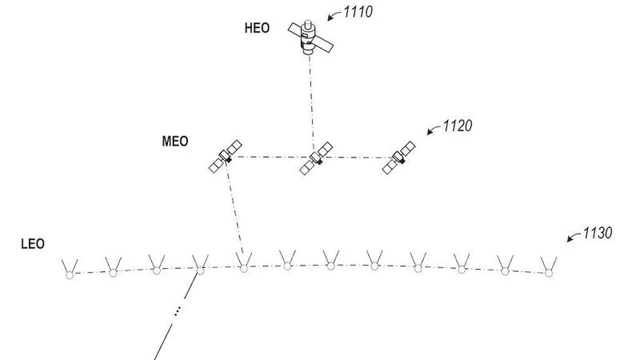
Intel's latest patent filings regarding orbital data centers signal a fundamental paradigm shift from centralized ground-based management toward distributed space computing. At the heart of this vision is a two-tier satellite network hierarchy, where computational loads are distributed strategically based on orbital priorities.
In traditional Low Earth Orbit (LEO) constellation models—such as Starlink or Amazon’s Project Kuiper—the bulk of routing logic and scheduling resides within ground segments. However, as networks scale to thousands of satellites moving constantly relative to one another and the observer on Earth, "information lag" becomes a critical bottleneck. The necessity of constant round-trips to Earth to adjust traffic routing or allocate frequency spectrums is increasingly inefficient.
The proposed solution involves designating a specialized class of high-performance satellites positioned in Medium Earth Orbit (MEO), Geosynchronous Orbit (GEO), or Highly Elliptical Orbit (HEO). From these vantage points, these assets maintain a broad overview of the LEO segment, acting as regional orchestrators. They assume responsibility for mission planning, interaction scheduling, and rapid response to failures or interference—effectively becoming full-scale cloud nodes hovering above the planet.
It is crucial to note that this is not about deploying generative AI in space, but rather solving fundamental challenges of network administration and data transmission. Offloading management functions to higher orbits allows for a radical simplification of LEO satellite architecture.
When a satellite is no longer burdened with the complex task of coordinating the entire network or waiting for ground-based commands, the requirements for its onboard compute power and communication modules are significantly reduced. This paves the way for the development of cheaper, lighter hardware—a critical factor for the rapid scaling of constellations.
In essence, Intel’s concept exports the principles of Edge Computing into outer space. While ground stations retain strategic oversight, operational network management is delegated to an "orbital brain." This not only slashes latency but also enhances system resilience against external disruptions and technical failures, establishing an autonomous digital ecosystem beyond Earth's atmosphere.
 The Price of Acceleration: CXMT’s Rapid Push into Memory