The e-bike industry is approaching a technological inflection point, where mechanical complexity is being superseded by digital intelligence. For decades, the rear derailleur and cassette have remained the industry standard, despite their inherent fragility and demanding maintenance requirements. Cutting-edge innovations from Chinese engineers are now charting a course toward a future where gear shifting is seamless, invisible, and fully automated. The introduction of Motor Gearbox Units powered by eCVT technology signals a paradigm shift toward a more integrated and efficient approach to vehicle architecture.
Eurobike 2026 in Frankfurt witnessed a landmark unveiling that could fundamentally redefine the modern pedelec. Two Chinese innovators—DJI's Avinox division and the ambitious Gobao—introduced the Motor Gearbox Unit (MGU) concept. The core of this solution lies in the unification of the electric motor and transmission into a single central hub, effectively rendering the traditional rear derailleur and multi-speed cassette obsolete.
At the heart of both developments is an electronic Continuously Variable Transmission (eCVT). While previous attempts to integrate gearboxes into motors were limited to a fixed number of speeds (typically up to twelve), the MGU approach offers a virtually infinite range of gear ratios. This transforms the riding experience into a seamless flow: users can either manually define "virtual" gears or simply set their preferred cadence. In the latter case, an intelligent system autonomously adjusts the motor's output based on terrain and load, liberating the rider from the constant need to manage the chain.
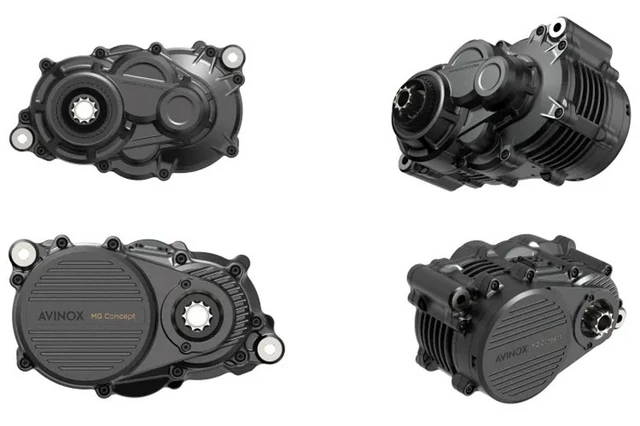
While the Avinox system remains a concept until 2027, its technical specifications are formidable. It boasts a transmission range of approximately 520% and a record-breaking shift speed of just 0.1 seconds. The system is engineered to withstand extreme loads and allows for gear ratio adjustments even when the bike is at a complete standstill. Strategically, Avinox has partnered with industry titans such as Canyon, Commencal, Forbidden, and Mondraker. Together, they have developed prototype frames optimized for this new drive unit, proving the platform's versatility across diverse segments—from aggressive eMTBs and gravel bikes to heavy-duty eSUVs and trekking models.
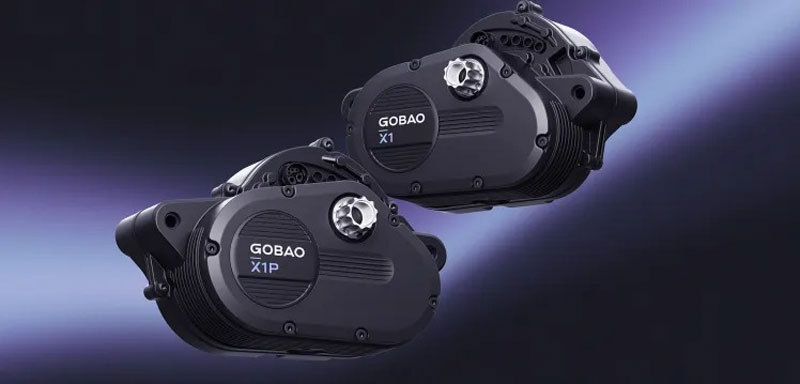
Gobao, meanwhile, has presented solutions that appear far closer to mass production. Their MGU X1 lineup offers two power tiers: the base X1 model delivers up to 120 Nm of torque and a peak output of 1200 W with a 400% shift range, while the X1P variant pushes these figures to 150 Nm and 1500 W with a 500% range. Weighing in at 3.85 kg, the unit supports a cadence exceeding 120 rpm and is adaptable to various speed limits (up to 25 or 45 km/h).
Gobao is placing a particular emphasis on energy autonomy. The ecosystem is complemented by batteries ranging from 500 to 900 Wh, featuring ultra-fast 30A charging. For instance, a 750 Wh battery can be charged from 0 to 80% in just 28 minutes—a critical advantage for commercial applications or long-distance touring.
From an engineering perspective, the shift to an MGU with eCVT addresses several fundamental pain points. First, it radically simplifies the architecture: the absence of a rear derailleur and cassette makes the bicycle significantly less vulnerable to mechanical damage and contamination. The tedious task of cleaning the drivetrain after muddy or rainy rides becomes a thing of the past. Second, by concentrating all heavy components in the center of the frame, the system optimizes mass distribution, directly enhancing handling and stability.
Should the durability of these systems be proven in real-world use and the pricing remain competitive, eCVT technology will inevitably migrate from premium e-MTBs to mass-market city, cargo, and family models, finally erasing the line between mechanical control and digital convenience.
 The Phenomenon of the Foldable iPhone Ultra