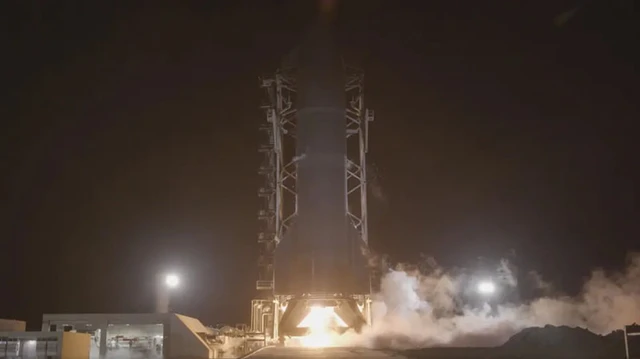
Space exploration is inherently fraught with high stakes and the inevitability of technical failure. While the recent malfunction of the Long March 7A rocket served as a rigorous stress test, it failed to derail China's ambitious orbital timeline. The rapid restoration of launch operations underscores the exceptional resilience and scalability of the nation's aerospace infrastructure. Amidst the global scramble for lunar resources, such operational agility is becoming a decisive competitive advantage.
Technological advancement in astronautics is seldom linear, and the recent incident involving the Long March 7A rocket serves as a poignant case in point. The vehicle's explosion 80 seconds after liftoff on August 11 could have easily triggered a protracted investigation and a freeze on launch campaigns. Instead, the Chinese aerospace industry demonstrated remarkable resilience; in practical terms, there was virtually no pause in operations.
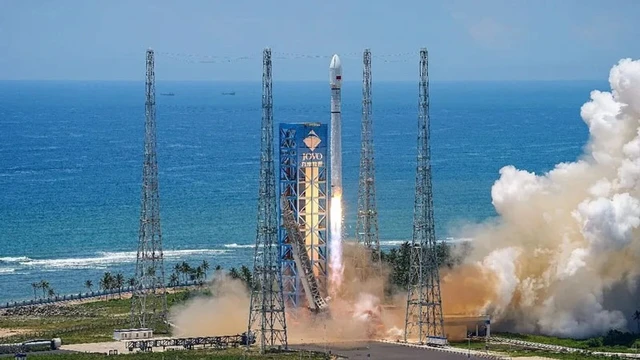
Within days, the system returned to its operational rhythm. On August 16, a Long March 12 successfully launched from the Wenchang commercial spaceport on Hainan Island. A day later, on August 17, a two-stage Long March 2C took flight from the Taiyuan launch center in Shanxi province. These two launches, executed in rapid succession, sent a clear signal: a localized technical failure had not compromised the broader strategic trajectory.
The payloads of these missions merit particular scrutiny, as they reflect two distinct vectors of China's development. The Long March 12 deployed another cluster of 24 satellites into Low Earth Orbit (LEO), which will integrate into the national satellite internet system. This is a direct manifestation of Beijing's intent to establish a viable alternative to Western constellations, ensuring global connectivity and informational sovereignty.
Simultaneously, the Long March 2C launch underscored China's standing as a pivotal provider of global launch services. The rocket delivered a remote sensing satellite—developed for the UAE's National Space Science and Technology Center—into its target orbit. Designed for environmental monitoring and natural resource management, this spacecraft demonstrates the deep integration of Chinese technology into the sustainability goals of other sovereign states.
However, the overarching question remained the fate of the Chang'e lunar program. The Long March 7A failure created a tangible risk of postponing the critical Chang'e-7 mission, which aims to detect traces of water on the lunar surface. Its lander, lunar rover, and specialized scout rover are tasked with gathering data that will serve as the foundation for future crewed bases. Despite the incident, the schedule remained intact: the launch is slated for August 23.
This momentum underscores the colossal scale of the Chinese space program. The Long March 2C launch marked the 664th flight for this rocket family, testifying to profound operational maturity and significant structural redundancy. The capacity to absorb isolated failures while maintaining real-time expansion positions China as one of the most efficient and formidable contenders in the modern space race.
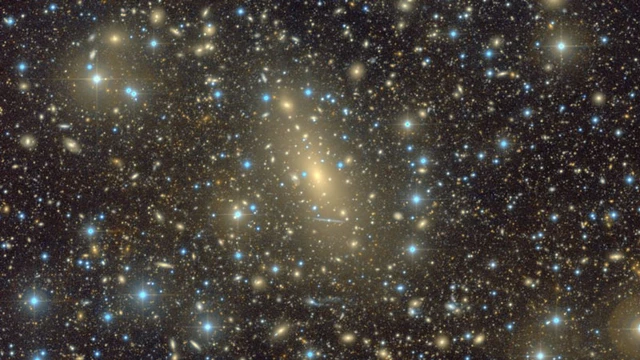 The Phenomenon of the Supermassive Galaxy IC 1101