Global logistics continues to grapple with the persistent challenge of "blind spots"—those critical gaps between major transshipment hubs where visibility of cargo vanishes. In high-stakes sectors such as pharmaceuticals, where security and timing are non-negotiable, traditional monitoring methods often prove either too cumbersome or prohibitively expensive. Samsara is tackling this vulnerability by deploying ultra-thin Bluetooth stickers integrated into a vast network infrastructure. This approach effectively transforms standard packaging into an active data node, delivering an unprecedented level of transparency across the entire supply chain.
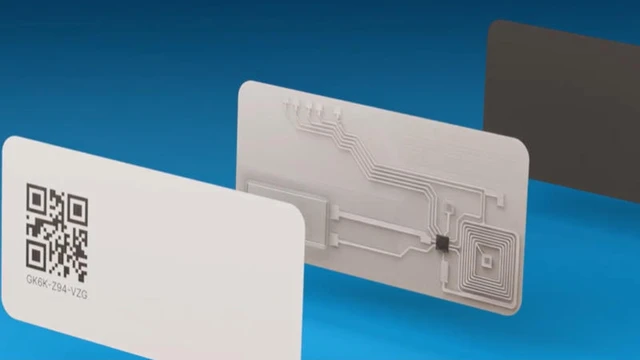
The challenge of real-time tracking for individual cargo units has long been constrained by physical and economic barriers. Full-scale GPS trackers equipped with cellular modules are prohibitively expensive for mass deployment and require bulky batteries that often trigger strict restrictions in air freight. Samsara’s answer to this dilemma is the Tracking Label—a flexible electronic sticker that is virtually indistinguishable from a standard piece of paper in its physical properties.
The technological elegance of this solution lies in its rejection of redundancy. Rather than attempting to transmit signals directly to satellites or cellular base stations, the sticker leverages the Bluetooth protocol to interface with the distributed Samsara Network. This infrastructure, spanning 99% of the major transport arteries in the US and tens of thousands of operational sites, functions as a massive receiver that captures the label's signal and relays it to the cloud.
Particular attention has been paid to the chemistry of the power source. Unlike standard lithium-ion batteries, the Tracking Label’s power cell contains no hazardous materials. This is a critical nuance for multimodal logistics: these labels can move via air, rail, and road without additional permits or specialized markings, and can be disposed of at the end of their lifecycle without adhering to complex environmental protocols. With a battery life of 45 days, the device comfortably covers the duration of most international logistics routes.
A comparison with alternative technologies underscores the pragmatism of this approach. RFID tags require readers in close proximity, rendering them useless during transit, while cellular modules deplete battery life far too rapidly. Bluetooth, paired with a dense network of gateways, provides the optimal equilibrium between power consumption, cost, and positioning accuracy.
From a business management perspective, the implementation of these labels shifts logistics from a "reactive" mode to one of "predictive control." Integrating this data into a client's information systems allows them to do more than just track a dot on a map; it enables real-time analysis of delivery schedules. This makes it possible to identify anomalous delays or signs of theft before an incident becomes critical.
Ultimately, the scalability of this solution allows companies to move beyond monitoring a few high-value containers toward total oversight of every single unit of cargo. This establishes a new standard of transparency, where every stage of a shipment's journey leaves a digital footprint accessible to the owner in a single click.
 The Evolution of Solid-State Batteries: From Smartphones to Electric Vehicles