The era of general-purpose neural networks is steadily yielding to an age of deep specialization and digital sovereignty. Global technology leaders are increasingly recognizing that foundation models cannot substitute for the unique operational context of a specific enterprise. At the heart of this transformation lies the conviction that corporate data serves as the bedrock for developing proprietary, closed-loop intelligence. This shift fundamentally redefines the human role within production processes, evolving the individual from a tactical executor into a strategic architect of meaning.
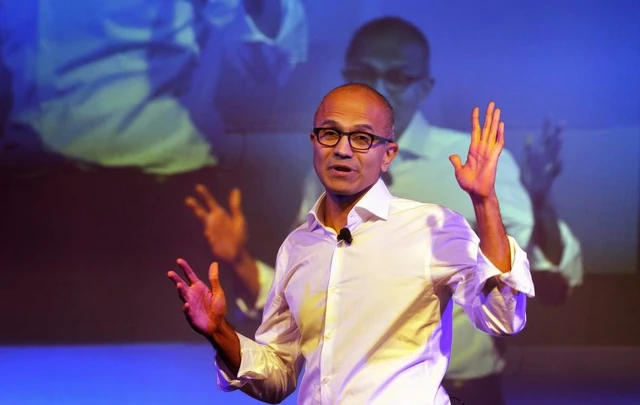
The modern artificial intelligence market is undergoing a fundamental conceptual shift: moving away from the pursuit of a single "omniscient" model toward a paradigm of multiplicity. Satya Nadella, CEO of Microsoft, posits that the industry's ideal state is one where the number of active AI models equals the number of existing companies. This vision stems from the realization that the general knowledge embedded in base Large Language Models (LLMs) is insufficient for solving highly specialized business challenges.
True value resides in context—proprietary data, operational telemetry, and the nuances of internal workflows that remain inaccessible to public models. Leveraging internal data for fine-tuning enables the creation of tools that do more than just mimic human speech; they deeply comprehend the internal logic of a specific business. This approach enhances economic efficiency and precision while insulating companies from dependency on external providers whose updates might unpredictably alter model behavior at critical moments.
This strategy is already manifesting in the infrastructure of the cloud giants. Microsoft is evolving Azure AI Foundry into a sort of "marketplace" or model orchestrator, where proprietary developments coexist with external solutions from DeepSeek and Cohere. Amazon, via its Bedrock platform, and Google Cloud—integrating Gemini with an extensive catalog of third-party tools—are following a similar trajectory. In essence, the industry is pivoting toward a multi-model approach, where a single task may be solved by an ensemble of specialized neural networks.
Parallel to this technical evolution, the social contract between the employee and the algorithm is shifting. Previous narratives regarding the total replacement of white-collar staff by AI are being transformed into a concept of intellectual augmentation. Mustafa Suleyman, leading Microsoft AI, clarifies that AI is designed to absorb routine and monotonous operations, not to replace professional expertise.
Here, a critical philosophical paradox emerges: as AI's computational power grows, the market value of human intelligence increases proportionally. In a world where content generation and data analysis become instantaneous and commoditized, the ability to set ambitious goals and synthesize disparate fields of knowledge becomes paramount.
Humans remain the sole element of the system capable of recognizing global patterns and defining the strategic vector. Without this external guidance, any computation—no matter how complex—risks devolving into a closed loop of self-repetition. Thus, AI does not displace the expert; it liberates them from mechanical labor, allowing them to focus on the synthesis of meaning and strategic leadership.
 Anthropic’s Strategic Push for Hardware Independence