The contemporary semiconductor landscape has evolved into a high-stakes arena of geopolitical friction, leaving tech titans caught in the crossfire of escalating trade wars. Facing surging component costs, Apple is aggressively seeking new avenues to optimize its supply chains in a bid to stabilize production expenditures. The company is increasingly pivoting toward Chinese memory manufacturers, navigating a precarious path despite stringent restrictions imposed by Washington. This strategic pivot has morphed into a sophisticated diplomatic gambit, with millions of devices and access to the world's most expansive consumer market hanging in the balance.
Economic headwinds in the consumer electronics sector have reached a tipping point, forcing even titans like Apple to recalibrate their pricing strategies. A primary catalyst for this shift has been the surging cost of memory components, pushing the company toward price hikes for its end products. However, simply passing these overheads onto the consumer is a precarious strategy. Instead, Cupertino is seeking to radically diversify its supplier base, turning its gaze toward the Chinese market.
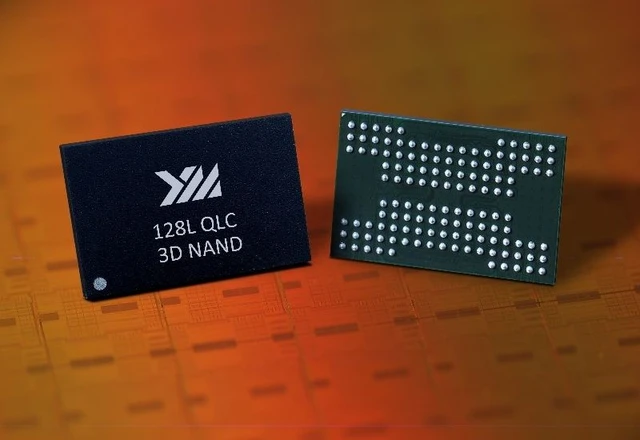
Apple's focus has landed on two industry heavyweights: CXMT, a specialist in dynamic random-access memory (DRAM), and YMTC, a leader in NAND flash memory. To put the stakes into perspective, DRAM governs a device's operational speed, while NAND serves as the bedrock for long-term data storage. By securing control over both memory types, Apple aims not only to diminish its reliance on current partners but also to negotiate more flexible pricing terms.
The path to collaboration with these Chinese firms is obstructed not by technical hurdles, but by geopolitical barriers. Both CXMT and YMTC are currently on the Pentagon's blacklist, a designation stemming from suspected ties to the PRC's defense apparatus. Amidst the ongoing friction between Washington and Beijing, any engagement between American corporations and blacklisted entities can be interpreted as a national security threat or a breach of export controls.
To navigate these restrictions, Apple has proposed a strategic compromise to U.S. regulators. The company is prepared to utilize components from CXMT and YMTC exclusively in devices destined for the domestic Chinese market. In essence, Apple is attempting to establish a "siloed" manufacturing pipeline: Chinese memory for Chinese users—a move that theoretically mitigates the risk of technology leakage or security compromises within the United States.
However, this strategy has yet to garner unanimous support in Washington. Tim Cook is personally spearheading negotiations with government officials, including Treasury Secretary Scott Bessent, though a faction of policymakers remains skeptical. Previous attempts by Apple to secure permits for localized procurement ended in rejection, making the current consultations pivotal.
At present, Apple relies on a "golden triangle" of suppliers: America's Micron Technology and South Korean giants Samsung Electronics and SK hynix. Integrating two Chinese firms into this fold would expand the partner list to five, creating an unprecedented level of supply chain redundancy. In an era where a single logistical failure or a new sanctions package can paralyze a production line, such diversification has become an existential imperative, regardless of the complex diplomatic maneuvering required to achieve it.
 The Phenomenon of the Foldable iPhone Ultra