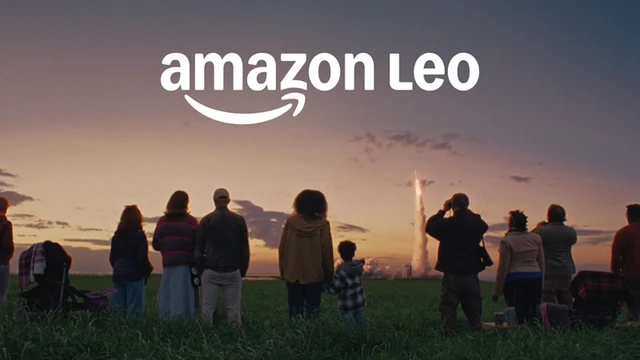
The race for global connectivity is migrating from terrestrial cell towers to the reaches of outer space. Amazon’s ambitions to deploy a massive satellite constellation signal a paradigm shift: moving away from specialized hardware toward seamless, ubiquitous connectivity via standard smartphones. The integration of Low Earth Orbit (LEO) systems with existing telecommunications infrastructure promises to finally obliterate the concept of "dead zones" across the globe. This strategy reimagines the satellite not merely as a tool for emergency response, but as an integral component of everyday digital interaction.
The current evolution of telecommunications is defined by a relentless drive toward the total elimination of coverage gaps. In this context, Amazon Leo (formerly known as Project Kuiper) represents more than just a business expansion; it is an ambitious attempt to redefine the fundamental way mobile devices interact with the outside world. A filing with the U.S. Federal Communications Commission (FCC) for the deployment of a constellation comprising 5,105 satellites in Low Earth Orbit (LEO) underscores the sheer scale of the company's ambitions.
At the heart of this technological shift lies the concept of Direct-to-Device (D2D). Unlike traditional satellite systems, which required cumbersome antennas and specialized terminals, D2D enables a standard smartphone to communicate directly with a satellite. This means users can remain connected even in the depths of the ocean or high up in the mountains without needing to switch their hardware.
To realize this vision, Amazon is betting on the synergy between its own resources and acquired assets. By integrating Leo's infrastructure with Globalstar’s frequency spectrum and ground stations, the company aims to move beyond primitive emergency text notifications. The long-term goal is full voice traffic, high-speed data transmission, and support for the Industrial Internet of Things (IoT). This strategic pivot comes at a significant cost: the acquisition of Globalstar is valued at $11.57 billion, with the deal expected to close by 2027.
However, the path toward total coverage is complicated by fierce competition over spectral real estate. Amazon Leo is vying for the use of L-Band frequencies (specifically the 1518–1525 MHz and 1668–1675 MHz segments), as well as bands historically reserved for Iridium. The situation is further complicated by RocketLab, which effectively absorbed Iridium in a deal worth approximately $8 billion and maintains its own interests in these spectral segments.
This clash of interests transforms a technical deployment task into a complex diplomatic and legal chess match. While Amazon asserts that its system can coexist with other users of adjacent bands without causing mutual interference, managing signal degradation in such a dense satellite environment requires surgical precision.
Ultimately, the project's success will determine whether satellite connectivity becomes a mass-market consumer product or remains a costly tool for a narrow circle of specialists and government agencies. A network of this magnitude has the potential to radically reshape the economics of remote regions and industrial logistics, providing seamless control over IoT assets anywhere on the planet.
 The Hidden Dynamics of Mercury's Contraction