The divide between content consumption and creation is effectively evaporating, transforming the passive user into a full-fledged creator. Generative AI has become the definitive bridge, enabling the realization of complex concepts without requiring deep technical expertise in programming. Roblox is taking a decisive step in this evolution by migrating its development tools directly onto mobile devices. Consequently, the architecture of virtual worlds is no longer the exclusive domain of professionals tethered to high-performance workstations.
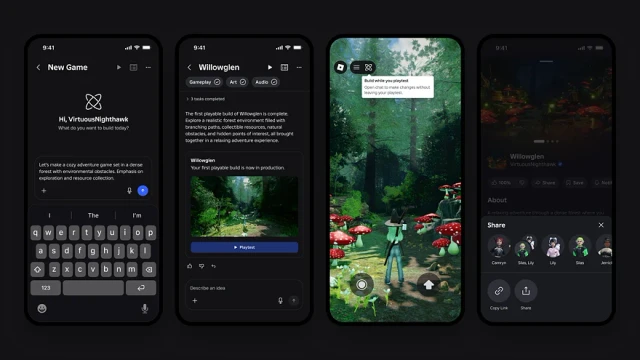
The metaverse industry is entering a phase of radical democratization. The primary catalyst for this shift is Build, an intelligent system integrated directly into the Roblox mobile application. At its core, the technology represents a paradigm shift from manual coding to a declarative approach: users describe their vision in plain text, and the neural network handles the entire technical implementation. The system automatically generates the base game scene, populates it with objects, and—most critically—establishes the primary gameplay mechanics.
This approach effectively eliminates the barrier to entry for millions of individuals who possess a creative vision but are limited by a lack of programming expertise. Build does not merely produce a "boilerplate"; it provides a flexible foundation. Any generated project can be manually edited, allowing creators to gradually increase complexity and add unique details. This transforms the development process from a tedious study of Lua syntax into an iterative journey of creative exploration.
However, the platform's ambitions extend beyond simple environment generation. In the long term, Roblox plans to implement full-scale AI agents that will function as virtual Technical Directors. These assistants will be responsible for testing game loops, analyzing user behavior, and suggesting gameplay optimizations. Consequently, the development cycle is compressed to its absolute minimum: from an initial prompt to a finished product with automated quality control.
The rollout of this technology is being handled with cautious precision. Public alpha testing begins on July 28 in New Zealand, allowing the company to stress-test the tool within a limited market before a global release. Particular emphasis has been placed on safety and moderation: while access to the tool is open to users aged nine and up, the right to publish creations for a wider audience is reserved for account holders over 16. This underscores the platform's commitment to accountability regarding AI-generated content within youth environments.
The economic model for Build follows a classic freemium structure: core functionality remains free to ensure mass adoption, while advanced generation capabilities will be available via subscription.
The launch of Build is not an isolated experiment, but rather a key component of a broader strategy for the vertical integration of generative AI. Previously, the company focused on creating individual 3D objects and auxiliary tools for professional developers. Now, Roblox is closing the loop—unifying visual generation, game logic, and the mobile interface into a single ecosystem where creating virtual reality becomes as intuitive as sending a text message.
 Nvidia N1X and the New Era of Arm PCs