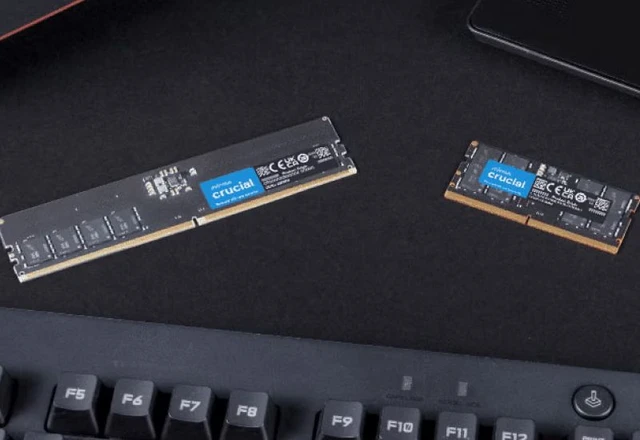
The AI boom is aggressively redrawing the contours of the modern hardware landscape. The colossal demand for server-grade DRAM has ignited a domino effect, the tremors of which are being felt even within the broadest consumer segments. Faced with a global supply crunch, manufacturers are retreating to solutions that were, until very recently, considered hopelessly obsolete. The return of low-capacity modules is not a calculated market trend, but a forced measure of survival in the era of artificial intelligence.
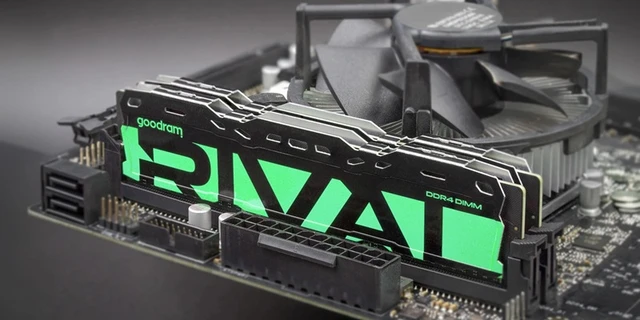
The paradox of the modern semiconductor industry lies in a jarring contradiction: while computational demands are skyrocketing, the market is suddenly taking a step backward. Even as the industry pushes toward terabytes of RAM, Polish manufacturer Goodram is resuming the production of DDR4 modules with a capacity of just 4GB. These sticks will supplement the existing Rival DDR4 Radiant lineup—which already includes 8GB, 16GB, and 32GB versions—but it is the return of the smallest capacity that serves as a cautionary signal for the market.
This regression is driven by the aggressive expansion of the AI server segment. Training Large Language Models (LLMs) and operating neural networks require staggering amounts of high-speed memory. Because DRAM fabrication capacity is limited, priority is being shifted toward high-margin server solutions. This has created an acute component shortage in the consumer segment, triggering price hikes and forcing brands to re-evaluate their product portfolios.
Only a few years ago, 4GB was considered the absolute floor—a threshold gradually being phased out of modern systems. Today, 8GB has become the baseline configuration for most laptops and pre-built PCs; any dip below this threshold is perceived as a slide toward the budget basement or outright obsolescence. However, current market dynamics dictate the terms: when access to high-density chips is restricted, manufacturers are forced to offer consumers whatever is physically possible to produce.
From a technical standpoint, Goodram's new modules remain fit for their intended purpose. According to the specifications, the memory will operate at 3200 MT/s. Depending on the specific model, latencies will be CL16 or CL18, with operating voltages ranging from 1.2V to 1.35V. These are standard DDR4 metrics, sufficient to maintain the functionality of entry- and mid-level systems.
The situation is further complicated by the fact that the transition to the DDR5 standard is not a universal panacea. While 16GB, 32GB, and larger DDR5 modules are available, their costs are often prohibitive, reaching hundreds or even thousands of dollars depending on the specifications. Consequently, the user is caught in a pincer movement between the premium cost of the new standard and the scarcity of the familiar old one.
It is crucial to recognize that the return of 4GB modules is not driven by a sudden resurgence in demand for low-capacity memory. On the contrary, it is a direct result of market distortion within the DRAM sector. Consumers haven't "decided" they want less memory; they find themselves in a situation where the market forces them to settle for less simply to keep devices affordable. This is a stark illustration of how a technological leap in artificial intelligence can paradoxically stifle progress or even degrade hardware accessibility for the average consumer.
 The Evolution of the Apple Home Ecosystem