For decades, the vast expanse between Earth and the Moon served as an insurmountable barrier to the real-time transmission of high-fidelity media. Traditional radio frequencies, while dependable, simply cannot deliver the bandwidth necessary to sustain modern ultra-high-definition standards. NASA has bridged this gap by deploying a cutting-edge laser communication system, effectively transforming the void of deep space into a viable broadcasting hub. This technological leap does more than just enable 4K video streaming; it establishes the fundamental architecture for a new era of interplanetary connectivity.
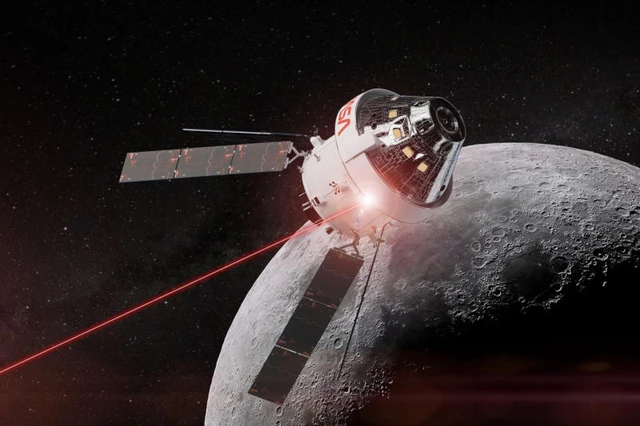
The transition from radio-frequency communication to the optical spectrum in deep space is analogous to the leap from legacy copper telephony to fiber-optic broadband. At the heart of NASA's recent triumph is the Orion Artemis II Optical Communications System (O2O)—the culmination of two decades of rigorous engineering. This laser terminal enables data transmission speeds of up to 260 Mbps, representing an order-of-magnitude increase over the capabilities of traditional systems.
It is important to note that the data throughput extended far beyond high-resolution 4K imagery. Alongside the video signal, critical telemetry, mission-essential data, and voice communications were transmitted via the laser channel. Optical communication minimizes latency and facilitates the transfer of massive datasets that were previously deemed too cumbersome for transmission from lunar orbit.
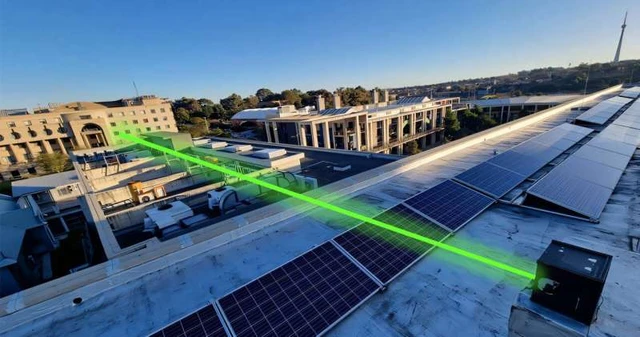
The signal's path from the Moon to the end-user constituted a sophisticated global relay. Initial capture of the laser beam was handled by the Mount Stromlo Observatory at the Australian National University, located near Canberra. The signal was then routed to NASA's White Sands complex for final processing and distribution. The final leg was powered by Amazon Web Services (AWS) infrastructure, ensuring seamless content delivery to millions of viewers. Ultimately, a transmission that traversed approximately 400,000 kilometers of vacuum reached 25 million people via NASA+, YouTube, and Amazon Prime Video.
Yet, NASA's partnership with cloud titans transcends mere promotional milestones. The AWS Elemental infrastructure has become the technological backbone of the official NASA+ platform, evolving it into a full-fledged streaming service. A more profound integration is unfolding at the Johnson Space Center, where cloud computing is leveraged to ensure the safety and precision of future missions.
Flight dynamics specialists execute tens of thousands of trajectory simulations for every viable launch window. The computational scale is staggering: each window generates between 2 and 5 terabytes of data. To process these volumes, NASA utilizes the specialized AWS GovCloud platform, which guarantees stringent confidentiality and security for government data.
The capacity for instantaneous scaling—deploying hundreds of Intel-based cloud instances—enables NASA to optimize flight trajectories in near real-time. This transforms the cloud infrastructure into a "digital proving ground," where any variable can be recalculated in a matter of minutes—a capability that is mission-critical for the success of deep-space exploration.
 The Endurance Potential of the Vivo V80 Lite 5G