The global semiconductor market has evolved into the primary theater of geopolitical conflict, with technology now serving as a strategic instrument of leverage. At the epicenter of this struggle lies ASML, the world's sole provider of the lithography equipment essential for producing the most advanced chips. Washington's efforts to systematically decouple China from cutting-edge technological advancements have placed European economic interests in the crosshairs. Consequently, the Dutch government has been compelled to enter direct negotiations with Washington to avert a technological blockade that could destabilize one of the industry's most pivotal players.
The diplomatic mission of Dutch Trade Minister Sierd Sardijs to Washington served as a stark signal: Europe can no longer afford to ignore the risks inherent in the United States' strategy of containing China. The primary objective of the visit was to discuss the MATCH Act—a legislative initiative that could radically alter the semiconductor equipment supply landscape and effectively sever the Eastern market's access to Western technology.
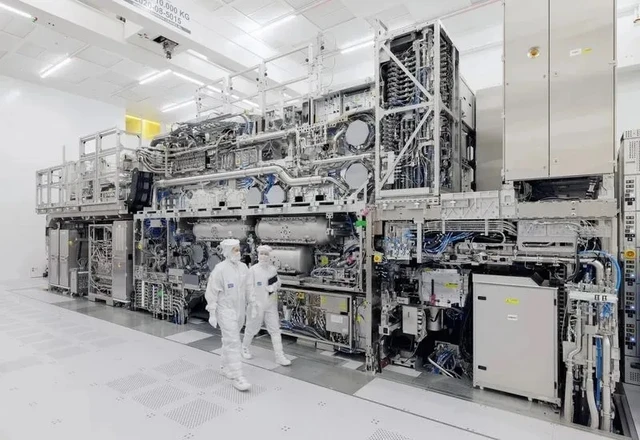
At the center of this geopolitical friction is ASML, a company that wields a virtual monopoly over the production of lithography systems. These machines are the instruments used to etch microscopic circuitry onto silicon wafers, forming the bedrock for the world's most powerful processors and AI accelerators. For the Netherlands, ASML is far more than a commercial enterprise; it is a strategic pillar and the region's most valuable company, whose prosperity is inextricably linked to the nation's economic stability.
The crux of the conflict lies in the expansion of the sanctions regime. Currently, the export of the most sophisticated Extreme Ultraviolet (EUV) systems to China is already restricted. These installations enable the creation of chips using the most advanced process nodes, which are essential for cutting-edge AI. However, the MATCH Act proposes far more draconian measures, seeking to extend the ban to Deep Ultraviolet (DUV) systems featuring immersion lithography.
Technically, DUV systems are considered less sophisticated than EUV, yet they remain critical for the production of a vast array of electronic components. At present, China relies on the procurement of previous-generation equipment that has been on the market for nearly a decade. For many Chinese fabrication plants, these systems are the only viable means of maintaining the production of mid-tier semiconductors.
The economic risks for ASML are substantial: the Chinese market accounts for approximately 19% of the company's net equipment sales. An abrupt cessation of deliveries, even for legacy DUV models, would create a significant revenue shortfall and could inadvertently accelerate China's pursuit of indigenous alternatives—a move that would, in the long run, erode the West's technological leverage.
The MATCH Act is currently under deliberation in the U.S. House of Representatives and the Senate. Until a final vote is cast, a window of opportunity remains for the Dutch government to persuade American legislators to adopt a more nuanced approach. The stakes in this high-stakes game extend far beyond corporate quarterly earnings; they concern the global balance of power in the race for technological sovereignty.
 The Dawn of the 2nm Era in the New iMac