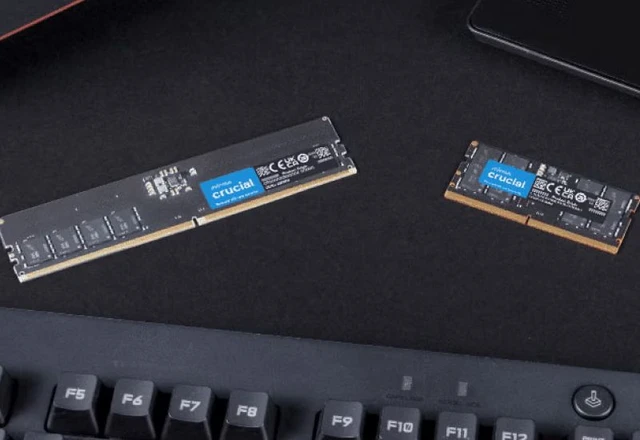
The global semiconductor market is undergoing a fundamental transformation, as memory chips evolve beyond their status as mere commodities. Amidst acute shortages of DRAM and NAND, these components are being repositioned as strategic assets—assets that now demand long-term financial commitments to secure. Micron’s massive $100 billion contracts cement a new era of elevated pricing, locking in these valuations for years to come. This underscores a profound disconnect between the accelerating pace of demand and the actual limits of production capacity.
The memory industry has long been defined by volatile boom-and-bust cycles, where oversupply inevitably triggered price collapses. Today, however, the rules of engagement are shifting. Memory chips are no longer viewed as interchangeable commodities; they have evolved into critical strategic assets, sparking a fierce competition among the world's largest tech titans. In this new paradigm, Long-Term Agreements (LTAs) have taken center stage, effectively creating "guaranteed reserves" of capacity for a select circle of elite clients.
American giant Micron has formally institutionalized this trend, announcing the signing of 16 Strategic Capacity Agreements (SCAs). The scale of these deals is staggering: 14 of them collectively secure approximately $100 billion in guaranteed revenue for the company. It is crucial to note that this figure represents a revenue floor based on guaranteed purchase volumes at fixed prices. In reality, actual profits could climb significantly higher should clients increase their orders or accept premium pricing amidst growing shortages.
To ensure these obligations are met, Micron is implementing stringent financial safeguards. The company expects to receive $22 billion in cash deposits and associated obligations. Essentially, clients are paying a premium for priority access to production lines, ensuring their own supply chains are not crippled in the coming years.
The geography and structure of these agreements also signal a systemic pivot. While such exclusive contracts were once the sole prerogative of titans like Apple or Nvidia, the circle has expanded to include four "very large" and three "medium-sized" clients who had not previously engaged in long-term capacity reservations. The contracts span from 2026 to 2030, with a standard three-year horizon established for the automotive sector, reflecting its shorter product lifecycles.
The urgency driving this shift stems from bleak supply projections. According to Micron, the market will face a tangible memory deficit until at least 2027. While a gradual improvement is expected by 2028, there are no guarantees that supply will ever truly catch up with an exponentially surging demand. This demand is fueled not only by standard hardware refresh cycles but by the explosive growth of AI infrastructure, which requires colossal volumes of High Bandwidth Memory (HBM) and NAND flash storage.
Micron's business model transformation is fundamental. The signed contracts already pre-allocate approximately 20% of the company's total DRAM production and 33% of its NAND capacity through 2030. This means a significant portion of future output is already spoken for, leaving the remaining volume to be distributed on the spot market, where prices are likely to remain elevated due to constrained supply.
Consequently, the industry is transitioning from a "produce-and-sell" model based on current market pricing to one of strategic resource orchestration. For end consumers and electronics manufacturers, the implication is clear: the era of cheap, abundant memory is fading, giving way to a period of rigid quotas and high prices dictated by the new technological arms race.

 The Evolution of the Apple Home Ecosystem