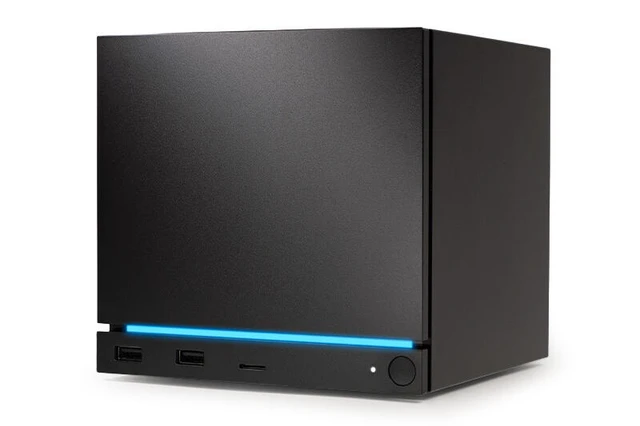
The disconnect between marketing hype and actual hardware performance is a perennial conflict within the gaming industry. Recent shifts in the positioning of the Steam Machine vividly illustrate the fragility of "theoretical" performance metrics. The pivot from categorical assertions to more guarded language exposes Valve's struggle to reconcile its ambitions with rigid technical constraints. This case serves as a mirror for an entire industry prone to inflating resolution and frame rate benchmarks.
One of the most contentious points of friction surrounding the Steam Machine has been Valve's claims regarding 4K resolution at 60 frames per second (FPS) via FSR technology. On paper, these specifications were impressive; however, real-world performance told a different story. Achieving such benchmarks was only possible by slashing graphical settings to their absolute minimum. Consequently, Valve was forced to pivot its rhetoric, replacing its definitive assertions with the more nuanced phrasing: "gaming in resolutions up to 4K with FSR 4.1."
This semantic adjustment was no accident. By introducing the qualifier "up to," Valve effectively insulated itself legally and technically, acknowledging that 4K is a theoretical ceiling rather than a consistent standard. The core issue was that at minimum settings, visual fidelity plummeted, negating the very purpose of a high-resolution display. Furthermore, several ambitious titles, such as Death Stranding 2, proved entirely incapable of maintaining a stable 60 FPS at 4K, rendering the initial promises effectively false.
Nevertheless, this incident served as the first public confirmation of FSR 4.1 support. AMD's upscaling technology is indeed capable of enhancing image clarity and detail by allowing the hardware to render at a lower internal resolution before applying intelligent scaling. Yet, even with the updated FSR version, the device struggles to compete with Nvidia's DLSS, which leverages dedicated Tensor cores and deep learning to deliver a cleaner, more stable image.
Valve's misstep is not an isolated lapse in judgment. The console industry has long been plagued by a "numbers race," where marketing departments consistently outpace the engineers. A prime example is the 2020 launch of the PlayStation 5: the console's packaging proudly touted 8K support, yet in practice, only a handful of projects—such as The Touryst in Minecraft—could actually operate in that mode. It wasn't until June 2024 that Sony acknowledged the redundancy of the claim, removing the 8K branding from its packaging.
Beyond technical discrepancies, the Steam Machine has faced significant scrutiny regarding its pricing strategy. With costs ranging from $1,049 for the 512GB model to $1,349 for the 2TB version, the community views the price point as unjustifiable. The consensus is that Valve should have either provided a more powerful hardware foundation or kept the cost within triple digits to ensure mass-market appeal.
Ultimately, the situation with the Steam Machine highlights a pivotal trend: the era of blind faith in "magic numbers" on a spec sheet is coming to an end. Users are increasingly demanding honest, stable performance over theoretical peaks—performance that doesn't require compromising visual quality for the sake of a frame rate.
 The Phenomenon of the Foldable iPhone Ultra