The battle between hardware security and human curiosity often spans decades. For the original PlayStation 2, the final bastion of defense was the MechaCon chip—a sophisticated silicon sentinel tasked with guarding access to the system's core. A quarter-century later, this stronghold has finally been breached through exhaustive reverse engineering. This breakthrough opens a new chapter in the annals of digital archaeology and the preservation of gaming legacy.
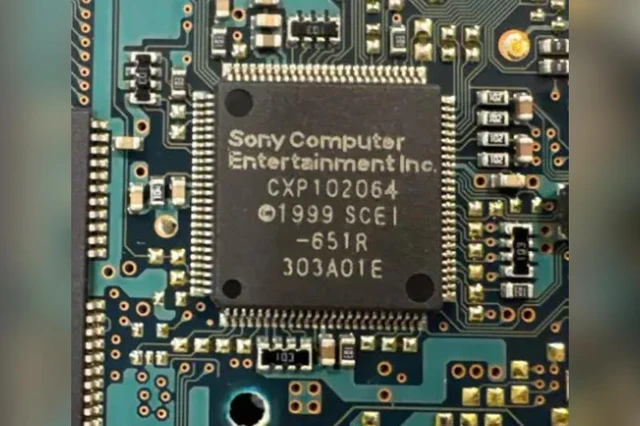
The annals of gaming history are replete with examples of closed systems eventually falling under intense scrutiny. However, the case of the first-revision PlayStation 2, released in 1999, stands as an exceptional testament to technical persistence. At the heart of the console's defense was a specialized chip, the CXP102064, better known as MechaCon. This component functioned as a multifunctional controller that did more than just manage the optical drive's mechanics and interface with flash memory; it served as a cornerstone of Sony's security architecture.
MechaCon was responsible for mission-critical processes, ranging from supporting MagicGate technology for memory cards to decrypting KELF executable files. Without a comprehensive understanding of this chip's operational algorithms, high-fidelity emulation and deep-level hardware repair remained either prohibitively difficult or partially impossible.
The process of dismantling these defenses required four years of meticulous labor, divided into two distinct phases: physical and software-based. The effort began with the chemical decapping of the chip's packaging to expose the silicon die. Utilizing high-precision microscopes and optical data extraction methods, researchers were able to analyze the internal circuitry, effectively "photographing" the device's logic at a microscopic level.
This physical analysis served as the foundation for identifying software vulnerabilities. Ultimately, a breach was discovered that allowed data to be extracted from the chip via software, effectively completing the reverse-engineering process.
The significance of this breakthrough extends far beyond mere curiosity. For the emulator development community and homebrew creators, uncovering the inner workings of MechaCon marks a transition to a new echelon of system reproduction accuracy. It now enables a more detailed simulation of hardware interaction, which is critical for the preservation of games that might otherwise be lost along with their physical media.
Furthermore, the impact of this discovery extends to arcade hardware. The PlayStation 2 platform served as the foundation for several renowned arcade systems, including the Namco System 246, System 256, and Konami Python 1. Because these systems rely on the same MechaCon chip, these rare industrial iterations are now accessible for full-scale analysis and preservation.
Ultimately, the collapse of a security layer that successfully resisted scrutiny for nearly three decades is a triumph of engineering rigor. It serves as a reminder that any closed system, given enough patience and the right toolkit, eventually becomes an open book.
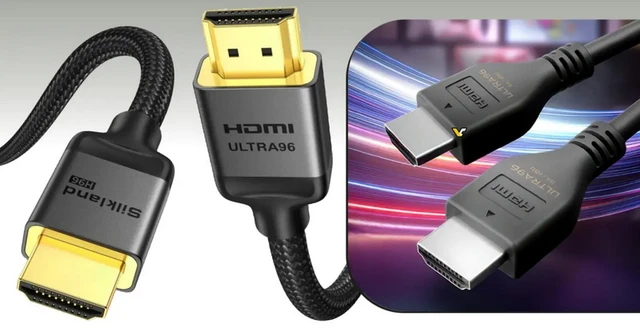 HDMI 2.2: The New Standard for Data Transmission