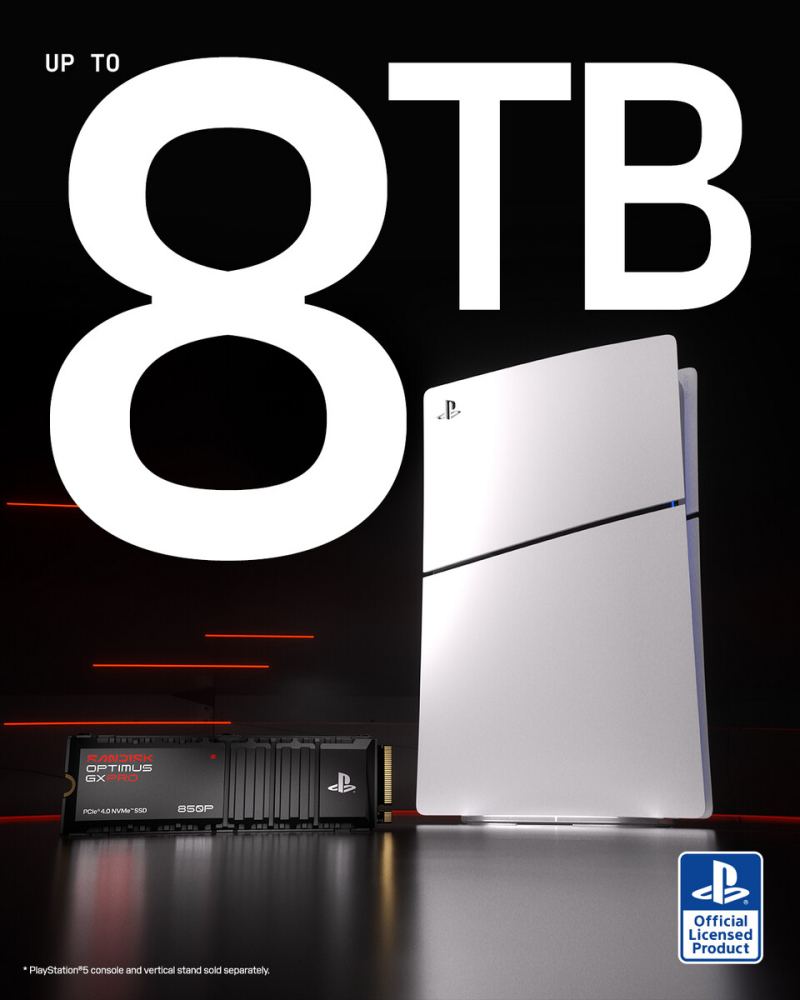
The modern gaming industry is grappling with an unprecedented explosion in data volume, as ultra-high-resolution textures and seamless open worlds demand staggering amounts of storage. In this environment, expanding a console's internal capacity has evolved from a mere convenience into a technical imperative for maintaining a comprehensive library of titles. To address this, SanDisk has unveiled the Optimus GX PRO 850P—a specialized drive engineered specifically to solve the storage deficit within the PlayStation ecosystem. This solution seamlessly blends extreme capacity with rigorous Sony certification.
The Optimus GX PRO 850P is making its debut—an M.2 NVMe SSD leveraging the PCIe 4.0 bus. Engineered specifically for the PlayStation 5 and its Pro iteration, the drive arrives as an officially licensed accessory. This certification ensures more than just seamless software compatibility; it guarantees optimized thermal management, a critical factor for maintaining stable read/write speeds within the console's constrained internal architecture.
Technically, the new drive is a close sibling to the Optimus GX PRO 850X, which targets the high-performance PC and enthusiast market. Despite their shared lineage, the decision to bifurcate the product line suggests a tailored performance profile designed to meet the specific demands of the console's API. It is likely that engineers have fine-tuned the controller's logic or adjusted the NAND configuration to maximize power efficiency and stability within the PlayStation ecosystem.
Looking at the specifications of the base 850X model provides a clear window into the internal architecture of this new console drive. At its heart lies a potent 8-channel WDC Black G2 PCIe 4.0 controller, supported by a dedicated DRAM cache. For storage, it employs Kioxia's 112-layer 3D TLC NAND flash. This synergy enables blistering sequential read speeds, effectively slashing game load times and ensuring near-instantaneous data access.
Perhaps the most striking feature of the Optimus GX PRO 850P is its massive capacity, reaching up to 8TB. In the console segment, this represents the absolute ceiling, transforming the PlayStation into a comprehensive media hub capable of hosting hundreds of massive AAA titles without the constant cycle of deleting and redownloading data.
While the exact price for the console version remains undisclosed, the product's market positioning is unmistakable: this is a premium-tier solution. For a point of reference, the 8TB PC variant commands a staggering $2,700. Such a price point underscores the exclusivity of the components and targets a user base for whom storage volume and rock-solid reliability are the primary priorities.
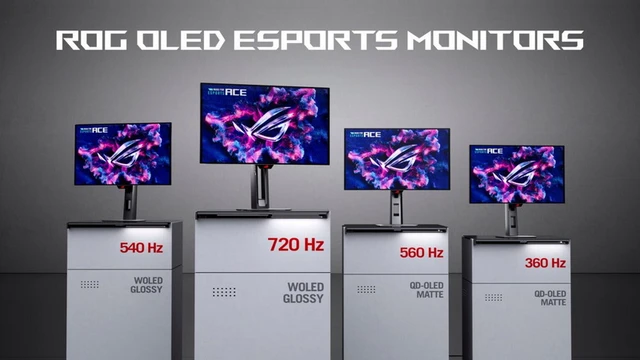 The Speed Limits of Modern Gaming Displays