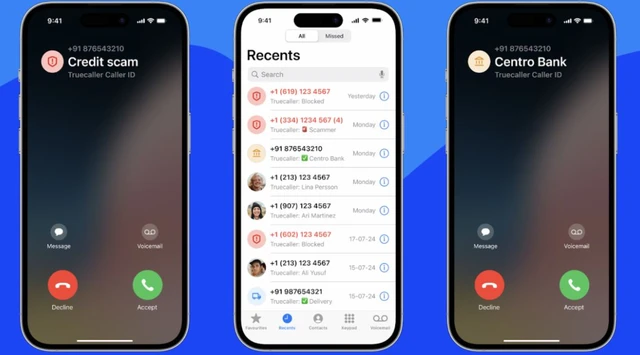
The global crusade against phone spam has long since evolved into a high-stakes technological war, pitting telecom operators and government regulators against third-party caller ID services. India, home to one of the world's most massive telecommunications markets, has become the primary battleground for a fierce confrontation between Truecaller and the national regulatory authority. At the heart of the dispute lies a fundamental tension: the state's drive for rigid traffic systematization versus the pragmatic realities of the user experience. This case exposes a profound crisis of confidence in official communication channels amidst an era defined by rampant digital fraud.
The conflict between Truecaller and the Telecom Regulatory Authority of India (TRAI) has escalated into an open confrontation. At the heart of the dispute is Truecaller's contention that current government anti-spam policies are not only failing to solve the problem but are actively stripping consumers of effective protection tools.
In 2024, Indian authorities implemented a system to segment commercial traffic by assigning specific number series to different categories. The 1400 range was reserved for telemarketing, while the 1600 series was designated for transactional calls and customer service. The regulator's logic was straightforward: create a "whitelist" of trusted numbers so users could instantly distinguish a legitimate business call from a fraudulent attempt. In practice, however, this initiative created a perilous blind spot.
The regulator prohibited Truecaller from flagging calls from these designated series as spam. This created a paradox: bad actors began aggressively exploiting the "trusted" 1400 and 1600 numbers, knowing that automated identification systems were restricted in their response. This has led to a rapid erosion of trust in legitimate businesses, which users now perceive as mere sources of unsolicited digital noise.
Truecaller's data reveals a systemic failure of this regulatory approach. Over the past eight months, users ignored 81% of calls from the 1400 series and 79% from the 1600 series. Furthermore, 74 million calls from these ranges were manually blocked during this period, with the blocking frequency for 1600-series numbers more than tripling since October 2025.
Finding itself in a position where direct "spam" labeling is forbidden, Truecaller has been forced to seek workarounds. The company introduced a "Frequently Blocked" indicator, alerting users when a specific number from a government-mandated series is being rejected en masse by the community. This is a calculated, almost "passive-aggressive" response to regulatory censorship, allowing the service to remain informative without violating formal mandates.
The situation is further complicated by TRAI's ambition to broaden its regulatory reach. The authority has requested the power to impose sanctions on caller ID applications—including Truecaller, Hiya, and Whoscall—under India's Information Technology Act. This could signal a shift from administrative restrictions to direct legal prosecution of services that attempt to provide users with a more objective view of their call logs.
Against the backdrop of this regulatory pressure, Truecaller is initiating a strategic pivot. Recognizing the risks of relying on advertising revenue, which is showing a downward trend, the company is diversifying its portfolio. A key move in this strategy is the launch of an eSIM service for travelers, initially available in 29 countries with data packages ranging from 1 GB to 20 GB.
This maneuver underscores a broader trend among modern tech giants: when engagement with government bodies in a specific jurisdiction becomes toxic, companies shift their focus toward creating new revenue streams that are decoupled from local regulatory volatility.
 The Endurance Potential of the Vivo V80 Lite 5G