Modern network throughput demands are scaling exponentially, driving an urgent shift toward next-generation data transmission protocols. The Wi-Fi 8 (802.11bn) standard is engineered to tackle the challenges of device density and signal stability, particularly within the architectural complexities of dense urban environments and sprawling multi-room layouts. TP-Link is taking a decisive lead in this evolution, unveiling its first wave of next-generation consumer solutions. These devices promise to redefine our understanding of home and office connectivity, transforming traditional networks into ultra-high-speed digital arteries.
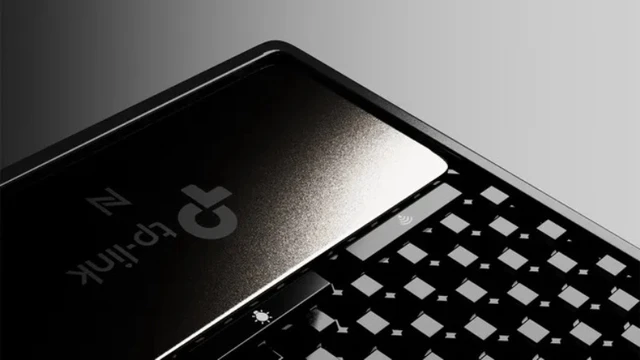
The evolution of wireless networking has reached a critical inflection point where simply increasing frequency is no longer sufficient. As the industry pivots toward the Wi-Fi 8 standard, TP-Link is among the first to translate these theoretical capabilities into tangible hardware. The centerpiece of this new lineup is the Archer 8 Ultra BN19000, a tri-band router designed to redefine performance benchmarks for the consumer segment.
The device's technical prowess is formidable: an array of 18 internal antennas enables an aggregate wireless throughput of up to 19 Gbps. This antenna configuration is critical for eliminating "dead zones" and ensuring stable coverage, even within high-density architectural environments. Complementing this is support for wired connections up to 10 Gbps, effectively transforming the router into a centralized data nerve center capable of handling heavy traffic loads with negligible latency.
However, for expansive environments such as luxury estates or modern corporate offices, a single router often falls short. To address this, TP-Link has introduced the Deco 8 Ultra BN22000 Mesh system. Unlike traditional routers, Mesh solutions create a unified, seamless fabric where multiple nodes collaborate to eliminate connectivity drops as a user moves through a building.
The BN22000 pushes the envelope of wireless speed to 22 Gbps, and when deployed as a three-module kit, the coverage area can extend to an impressive 910 square meters. This shifts the network infrastructure from a collection of disparate access points into a single, cohesive, high-performance ecosystem.
Beneath the raw power lies a fundamental architectural overhaul of signal transmission methods. The new devices implement Enhanced Long Range and Distributed Resource Units. The latter is particularly pivotal for the Internet of Things (IoT) ecosystem, allowing for the efficient allocation of network resources among numerous low-power sensors and smart devices—devices that typically reside on the network fringes and are prone to connectivity instability.
To combat the signal congestion and electromagnetic noise inevitable in multi-dwelling units, the devices employ Unequal Modulation and advanced Modulation and Coding Schemes. These algorithms dynamically adapt data encoding, ensuring a stable information flow even when the spectrum is saturated by neighboring networks.
The hardware foundation of these products relies on cutting-edge chipsets from industry titans—Broadcom, MediaTek, and Qualcomm. This ensures not only immense computational power but also forward compatibility with future iterations of the 802.11bn protocol.
TP-Link’s market penetration strategy involves a phased rollout. Following the launch of these flagship models, the ecosystem is set to expand; by mid-next year, the company expects to release the Roam 8 router, alongside specialized PCIe and USB adapters. These peripherals will allow users to integrate Wi-Fi 8 capabilities into workstations and laptops that lack native support for the new standard.
 The Power Shift at Apple