Apple’s pivot to proprietary silicon stands as one of the most pivotal technological shifts of the past decade. Yet, the transition was anything but linear, fraught with internal friction regarding the trajectory of its flagship workstations. The saga of the Mac Pro illustrates a precarious tension between bold engineering ambition and cold economic pragmatism. At the heart of this conflict lay the "extreme" processors—unrealized visions that had the potential to fundamentally redefine the benchmarks of desktop performance.
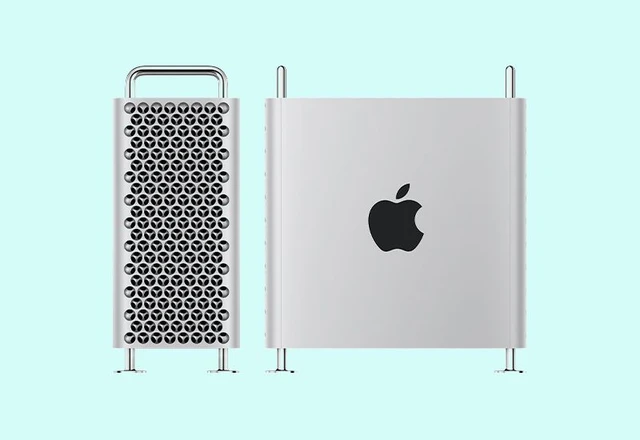
The sunsetting of the Mac Pro represents the logical culmination of Apple’s overarching strategy toward hardware unification. In recent years, this powerhouse workstation remained something of an anomaly within the company's ecosystem, clinging to the Intel architecture while the rest of the lineup aggressively transitioned to ARM-based silicon. Yet, despite the definitive break from x86, Apple's internal roadmap was far more nuanced and layered than it appeared from the outside.
Insider reports suggest that Apple did not initially intend such an abrupt departure from the Mac Pro family. Two prospective models were under development, codenamed J170 and J190. The latter was envisioned as the ultimate expression of Apple Silicon, powered by the M3 Ultra—a chip that had already demonstrated its prowess in the Mac Studio. Meanwhile, the J170 was conceived as a strategic hedge: an Intel-powered machine designed to maintain Apple's presence in the ultra-high-end workstation segment for users who remained tethered to legacy infrastructure or specialized software.
However, the real drama unfolded within the semiconductor pipeline. Apple sought to engineer an entirely new class of processors: the M2 Extreme and M3 Extreme. These chips were intended to be the pinnacle of the company's engineering efforts, significantly eclipsing even the Ultra series in raw computational power. In the context of Apple Silicon architecture, this would have required more aggressive die scaling or the implementation of novel interconnect technologies to integrate a higher density of cores and memory without sacrificing efficiency.
Two fundamental hurdles stalled these ambitions: manufacturing economics and market demand. The cost of developing and fabricating "Extreme" grade silicon was prohibitively high, and the narrow consumer base of the Mac Pro could not generate the sales volume necessary to justify such an investment. Ultimately, the company concluded that creating specialized, extreme-tier silicon for a niche product was strategically untenable.
As a result of this pivot, the mantle of the primary performance powerhouse shifted to the Mac Studio. While this system is equipped with the most powerful proprietary processors available, it remains a pale shadow of what hypothetical Extreme-based systems could have achieved. Thus, the Mac Pro fell victim to corporate pragmatism: Apple prioritized stable margins and platform unification over technological expansionism in the realm of high-performance computing.
 Energy Autonomy: The Extreme Edition