Apple's pivot from PowerPC to Intel stands as one of the most audacious and strategic gambles in the company's history. This was more than a mere hardware refresh; it was a fundamental reimagining of professional workstation performance. The debut of the original Mac Pro served as the crescendo of this transformation, signaling the sunset of the G5 era and establishing a new benchmark for raw computing power. Looking back twenty years later, this trajectory reveals itself as the essential foundation that paved the way for the eventual emergence of Apple Silicon.
Two decades ago, Steve Jobs took the stage at WWDC to unveil a machine designed to embody the company's professional ambitions: the first Mac Pro. This was more than just the launch of a new product line; it was the triumphant conclusion of Apple's migration from PowerPC processors to the Intel x86 platform. The transformation was remarkably swift, with Apple successfully transitioning its core product ecosystem to the new hardware base in just 210 days. Following the updates to the iMac, Mac mini, and MacBook, the flagship Mac Pro replaced the Power Mac G5, finally closing the chapter on Apple's partnership with IBM and Motorola.
Positioned as the "king of performance," the new workstation promised a twofold increase in speed over its predecessor. The technical stack of the era was impressive in its scalability and raw power. At the heart of the system were two dual-core Intel Xeon processors with clock speeds up to 3.0 GHz. Each featured 4 MB of shared L2 cache and an independent 1.33 GHz system bus, delivering data throughput that was unprecedented for the period.
The graphics subsystem was engineered specifically for flexibility. While the base configuration included an Nvidia GeForce 7300 GT with 256 MB of GDDR3 memory, professionals could upgrade to more potent alternatives like the ATI Radeon X1900 XT or the Nvidia Quadro FX 4500. This modularity was critical for video editors and 3D artists who demanded maximum GPU performance.
Memory and storage capabilities further cemented its flagship status. The system shipped with 1 GB of fully buffered DDR2-667 RAM, expandable to a staggering 16 GB. The storage subsystem began with a 250 GB drive, but four available bays allowed users to scale total capacity up to 2 TB. For media workflows, the machine featured a SuperDrive supporting dual-layer DVDs, along with an additional slot for two more optical drives.
In terms of connectivity, the Mac Pro was a benchmark of functional design: dual Gigabit Ethernet ports, Bluetooth 2.0+EDR, and a comprehensive suite of FireWire ports (800 and 400), which remained the industry standard for transferring heavy media files at the time. Four PCI Express 1.0 slots, including one double-width slot, allowed for the installation of the era's most powerful graphics cards.
Upon its early 2007 market debut, the device was offered with three processor tiers: from the entry-level Intel Xeon 5130 clocked at 2.0 GHz to the top-tier 5160 reaching 3.0 GHz. Apple introduced a sophisticated online configurator that allowed for over 4.9 million unique hardware combinations. The base price for a system equipped with Intel Xeon 5150 processors (2.66 GHz) stood at $2,499, making it an accessible tool for serious production environments.
The saga of the Mac Pro concluded in a cycle that led the company toward total architectural autonomy. The final iteration of the line arrived in 2023, powered by the M2 Ultra chip, after which Apple announced the retirement of the series. The role of the high-performance yet compact workstation has since shifted to the Mac Studio, marking a fundamental transition from modular systems with discrete processors to integrated Systems on a Chip (SoC).
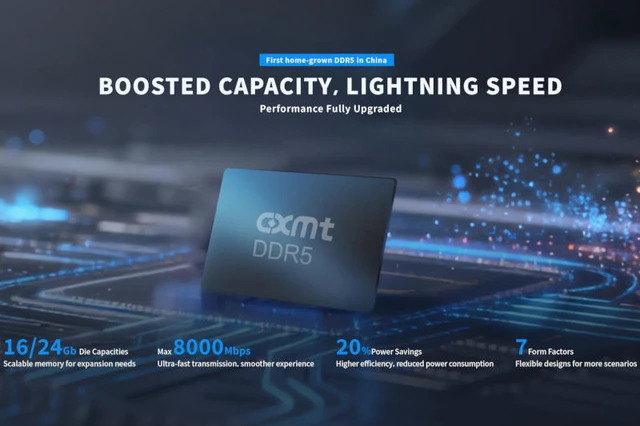 The Price of Acceleration: CXMT’s Rapid Push into Memory