The contemporary race for dominance in Low Earth Orbit (LEO) demands more than just raw rocket power; it requires an impeccable ground infrastructure. A catastrophic failure during testing of the New Glenn heavy-lift vehicle has forced Blue Origin to fundamentally overhaul its operational approach to Launch Complex 36 (LC-36). Rather than simply restoring the damaged facility, the company is pivoting toward a technological evolution of its launch methodologies. This strategic shift directly impacts the deployment timelines for global satellite constellations and humanity's overarching ambitions to return to the Moon.
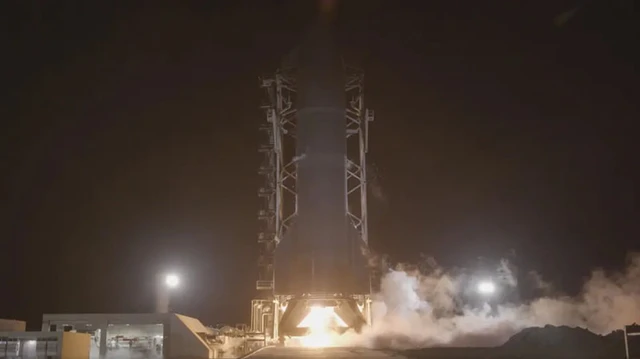
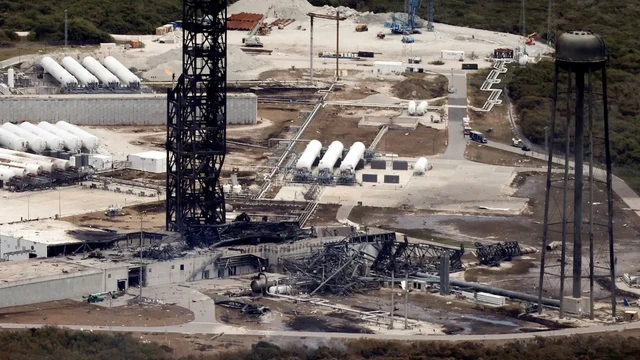
The incident at Launch Complex 36 (LC-36) in Florida has proven to be a watershed moment for Blue Origin. The explosion of the New Glenn heavy-lift rocket during static fire tests effectively neutralized the company's only available launch facility. This failure occurred at a critical juncture: the vehicle is tasked with deploying the Amazon Leo satellite constellation, underscoring the precarious interdependence between infrastructure stability and the commercial ambitions of the tech giant.
Initial projections of a straightforward restoration by late 2026 have given way to a more fundamental architectural pivot. Blue Origin leadership has abandoned the idea of simply restoring LC-36 to its previous state; instead, the company is implementing a hybrid launch scheme that integrates both horizontal and vertical transport and processing. This transition allows the facility to support infrastructure originally designed for the New Glenn 9x4—a more powerful and massive iteration of the vehicle. Such a strategic shift not only mitigates the fallout from the accident but also establishes the foundation for a significantly higher launch cadence, which is critical in the face of fierce competition from SpaceX.
Forensic technical analysis points to an anomaly in the aft section of the first stage as the catalyst for the catastrophe. The event has served as a wake-up call for the entire aerospace industry, sparking urgent discussions regarding the expansion of safety buffers around spaceports. These failures during static testing demonstrate that even controlled trials can result in catastrophic destruction if protective systems are not scaled to match the energy potential of modern heavy-lift rockets.
For NASA, the situation with Blue Origin is strategic. As a key partner in the Artemis program, New Glenn is the primary vehicle intended to deliver the Blue Moon uncrewed lander to the lunar surface. Despite these technical setbacks, the agency continues to treat this as "Plan A," though pragmatic necessity has forced NASA to develop contingency scenarios involving alternative launch providers. While the 2027 timeline provides Blue Origin with some breathing room, the pressure is mounting.
The broader market dynamics further amplify the tension: both Amazon and AST SpaceMobile are now tethered to Blue Origin's ability to restore its operational tempo. The scarcity of available heavy-lift capacity has become the primary bottleneck for the expansion of satellite-based internet. In this context, New Glenn is viewed not merely as a transport vehicle, but as the only viable competitor to SpaceX capable of handling super-heavy payloads and shifting the balance of power in commercial spaceflight.
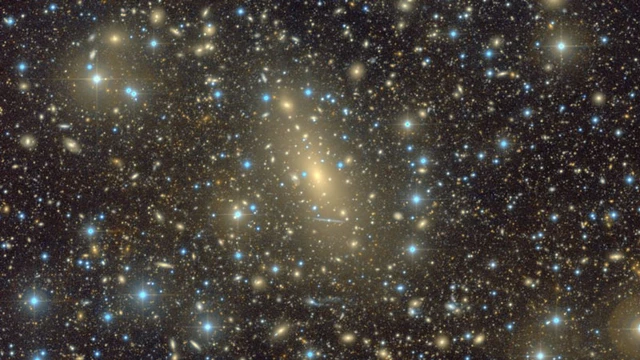 The Phenomenon of the Supermassive Galaxy IC 1101