The modern semiconductor industry is driven by the relentless logic of maximizing wafer yield. With the rollout of the Blackwell architecture, Nvidia continues to employ established chip-binning strategies to mitigate manufacturing losses. Recent discoveries confirm that several mid-range GPUs are sporting hardware derived from higher-tier models, raising critical questions regarding the actual value these modifications provide to the end user.
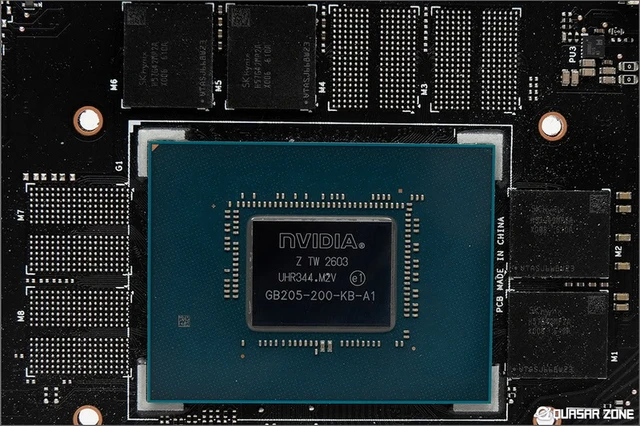
The standard GeForce RTX 5060 is powered by the GB206 GPU. Its specifications are strictly defined: 3,840 CUDA cores, 120 texture mapping units (TMUs), and 48 render output units (ROPs), paired with 8 GB of GDDR7 memory on a 128-bit bus. However, market dynamics have introduced a twist: several variants have surfaced utilizing the GB205 die—a more advanced chip originally engineered for high-performance models like the RTX 5070 or the professional RTX PRO 3000 series.
Such a strategy is far from novel in the industry. Both Nvidia and AMD have long utilized "binning"—a process where chips that fail the stringent quality control required for flagship models are not discarded, but rather repurposed for entry-level devices. Should a GB205 die exhibit defects in its CUDA cores or fail to maintain stability at peak frequencies, it is effectively "down-binned"—both programmatically and hardware-wise—to match the GB206 specifications. The result is a product that aligns perfectly with the lower-tier model in terms of performance and power consumption, despite its premium lineage.
This trend is clearly visible in recent releases from MSI (Gaming and Ventus series) and Asus (the Dual GeForce RTX 5060 OC), where the GB205-200-KB-A1 GPU has been identified. A critical technical detail involves interface limitations: while the native GB205 chip supports 16 PCIe 5.0 lanes, these have been throttled to 8 in the RTX 5060 modifications to maintain consistency across the product line.
Empirical testing conducted by Quasar Zone corroborates this theory of production optimization. Performance benchmarks comparing the standard version against the GB205-based model revealed nearly identical results. While the "superior" chip showed marginal gains in rare scenarios, these are likely attributable to factory overclocks implemented by the manufacturer rather than the silicon's origin.
Ultimately, the deployment of a down-binned GB205 in budget GPUs is a purely economic maneuver. For the end-user, this does not translate into a "free" performance boost; rather, it underscores the industry's systemic approach to resource efficiency, ensuring that every viable piece of silicon finds its place within the product hierarchy.
 The Speed Limits of Modern Gaming Displays