The battle for data center supremacy has long since evolved beyond a mere race for clock speeds, shifting instead toward a sophisticated pursuit of the ideal balance between compute density and power efficiency. Intel’s recent departure from multithreading across its consumer and server lineups appeared to be a bold move toward die optimization and the streamlined purity of single-threaded execution. However, relentless competition from AMD and the strategic expansion of Arm are forcing the company to recalibrate its priorities. The return of Hyper-Threading in the upcoming Coral Rapids generation is more than a technical reversal; it is a strategic response to the rigorous demands of high-throughput, enterprise-grade systems.
Simultaneous Multithreading (SMT), known within the Intel ecosystem as Hyper-Threading, has served as a cornerstone of server computing efficiency for decades. The premise is simple yet effective: a single physical core handles two independent software threads, filling execution unit gaps and maximizing the processor's computational throughput. In recent years, however, the industry has faced a critical dilemma: do the performance gains provided by SMT justify the associated silicon costs?
For the consumer market, the verdict was clear. With the launch of the Core Ultra 200 series, Intel has decisively moved away from Hyper-Threading. For the vast majority of users—whose workloads rarely exceed a few resource-intensive applications—multithreading support in entry-level ten-core chips became redundant. Removing SMT allowed Intel to reduce die area and lower power consumption, which in turn freed up resources to boost single-threaded performance by eliminating internal contention for shared core blocks.
The enterprise landscape tells a different story. Intel traditionally bifurcates its solutions into two camps: high-performance P-cores and energy-efficient E-cores. While the latter have lacked Hyper-Threading support since 2012 (starting with the Saltwell generation), P-cores have always relied on the technology, including the current Granite Rapids. Nevertheless, the company's roadmap indicated a temporary hiatus: the upcoming Xeon 7 Diamond Rapids family will also lack SMT support.
This strategic pivot appears to have been deemed premature or insufficient in the broader battle for market share. Lip-Bu Tan, one of Intel's key executives, has confirmed that multithreading will make a comeback in 2028 with the release of Coral Rapids. In an environment defined by fierce competition with AMD and the growing influence of Arm-based processors, the ability to efficiently handle parallel workloads is a critical success factor. In server scenarios, Hyper-Threading can deliver performance gains of up to 30%, making it an indispensable tool for data centers.
While specifics regarding Coral Rapids remain sparse, certain trajectories are already evident. The processors are expected to feature 8-channel memory, though this parameter may be revised depending on the market reception of Diamond Rapids, which offers 16 channels. Regarding the manufacturing foundation, Intel will likely utilize either the 14A process or a deeply modernized 18A-P node.
Ultimately, the resurgence of Hyper-Threading is a tacit admission that a one-size-fits-all approach to silicon optimization is flawed. While energy efficiency and peak single-threaded speed are the priorities for the home PC, multithreading remains the only viable way for the corporate sector to ensure necessary throughput while maintaining reasonable chip dimensions.
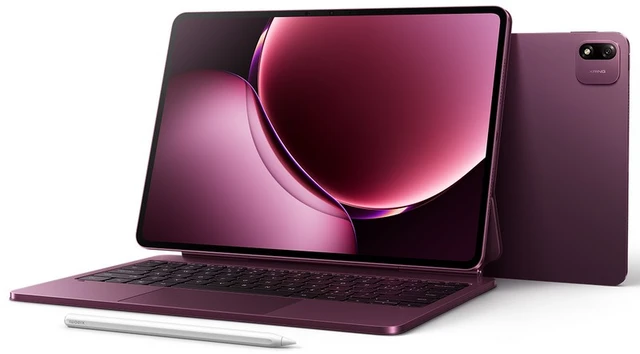 Power and Poise: The Xiaomi Pad 9 Pro Max