The era of physical media has long since been supplanted by cloud libraries and digital distribution. Yet, for veteran gamers, the tactile satisfaction of swapping cartridges remains one of the most enduring memories of the medium. A recent engineering experiment demonstrates that this nostalgia can be seamlessly integrated with modern hardware by leveraging legacy SSDs and system automation. This approach transforms an intangible data folder into a physical artifact, restoring the ritualistic engagement that once defined the gaming experience.
In an era where gaming has evolved into infinite streams of data accessible via a single click, the notion of physical software ownership feels like an anachronism. Yet, the concept of the "game cartridge" is experiencing a revival, fueled by the intersection of the secondary electronics market and 3D printing. At its core, this project utilizes standard 2.5-inch SATA III SSDs, transforming them into dedicated storage modules for specific titles within a Steam library.
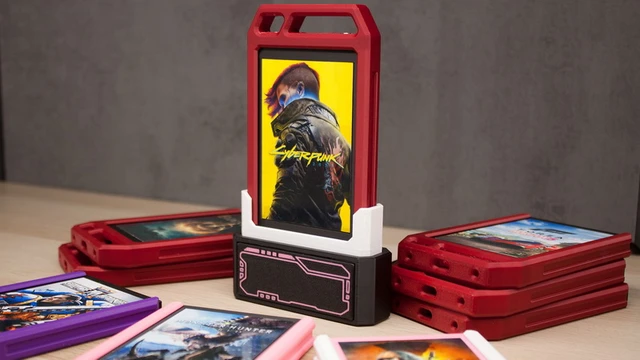
The technical implementation begins at the hardware level: each 128GB SSD is housed in a custom 3D-printed enclosure, styled to mirror the cover art of its respective game. These modules interface with an external docking station, enabling instantaneous swapping—a tactile nod to the mechanics of the eight- and sixteen-bit console eras.
However, the project's true value lies not in its aesthetics, but in the programmatic automation of the launch process. To eliminate the friction of manually navigating the Steam interface after inserting a drive, a sophisticated multi-layered trigger system was engineered using Linux.
The workflow operates as a chain of events: upon connection, a udev (device manager) rule triggers, detecting the new hardware. This event initiates a systemd daemon, which subsequently scans the SSD for a specific script. Once identified, the system leverages the Steam URL protocol—Valve's standard mechanism for launching applications via external commands (e.g., steam://run/[appid]). The result is a seamless user experience: inserting a cartridge into the slot automatically opens the game page or launches the title itself.
From a practical standpoint, this architecture addresses the constraints of limited primary system storage. Rather than saturating an internal SSD with hundreds of gigabytes of data, the library is distributed across these external modules.
Naturally, this approach has its limitations and is tailored to a specific use case. It is ideal for single-player titles with static data footprints that do not require weekly updates. For modern "live service" games, where patches can significantly alter file sizes, such modularity becomes cumbersome. Furthermore, there is a risk of instability when moving titles between different physical media due to the nuances of Steam's installation paths.
Nevertheless, this project highlights a broader trend toward the "materialization" of digital content. It is no longer merely about convenience or storage optimization; it is an attempt to reintroduce the element of collecting and physical interaction into gaming, transforming a mundane SATA drive into a curated artifact of the digital age.
 The Horizon of China's Technological Sovereignty in Lithography