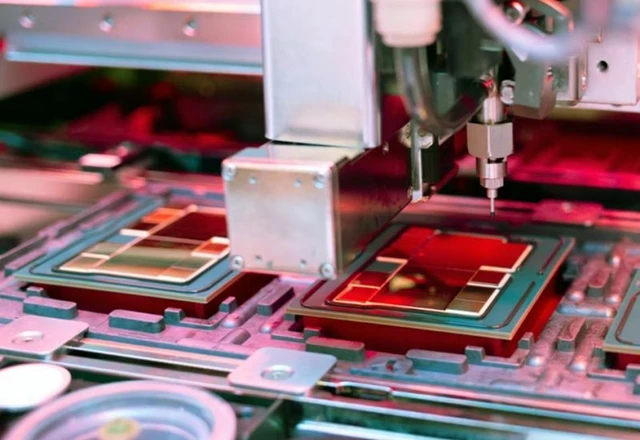
The GPU market frequently sees a single model undergo multiple iterations of hardware optimization throughout its lifecycle. MSI is leaning into this trend with updated versions of the GeForce RTX 5060; while the aesthetics remain unchanged, the internal architecture has been fundamentally overhauled. This shift toward a modified die highlights the delicate balance manufacturers must strike between production costs and overall product efficiency. At the heart of this evolution is Nvidia's strategic redistribution of high-performance silicon to bolster its mass-market offerings.
MSI has unveiled four updated iterations of its graphics cards: the GeForce RTX 5060 V1 Gaming and Gaming OC, alongside the RTX 5060 V1 Ventus 2X and Ventus 2X OC. At first glance, these devices appear identical to their predecessors; however, a critical shift has occurred beneath the heatsink. In these new revisions, the standard GB206 GPU has been replaced by a cut-down version of the more advanced GB205 die.
From a technical standpoint, this pivot is a textbook example of "binning"—the practice of artificially limiting a chip's capabilities to fit a specific market segment. In its full implementation, the GB205 powers higher-tier models like the RTX 5070, where it leverages 6,144 CUDA cores and a wide 192-bit memory interface. For the V1 series, Nvidia has applied aggressive filtering: several compute units have been disabled, and the memory interface has been slashed by a third. Consequently, while the card retains the core specifications of the RTX 5060—3,840 CUDA cores and a 128-bit interface—it now operates on entirely different physical silicon.
Despite the change in "heart," the general specifications remain untouched. The cards are equipped with 8 GB of GDDR7 memory, operating at an impressive 28 Gbps per pin. This yields a bandwidth of 448 GB/s which, coupled with the PCIe 5.0 x8 interface, ensures efficient handling of modern graphical workloads.
However, the transition to the GB205 has necessitated certain adjustments to operating parameters. The most notable changes appear in the Gaming OC V1: the GPU's Boost clock has been dialed back from 2625 MHz to 2587 MHz, while power consumption has dipped from 155W to 150W. A similar TDP reduction to 150W affects the standard Gaming V1, although its Boost clock remains steady at 2497 MHz.
An interesting trend emerges within the Ventus 2X V1 lineup. While clock speeds and power draw (145W) remain unchanged, the device's weight has increased from 511 to 548 grams. This gain in mass indirectly suggests modifications to the PCB layout or cooling system, likely driven by the distinct thermal characteristics of the new die.
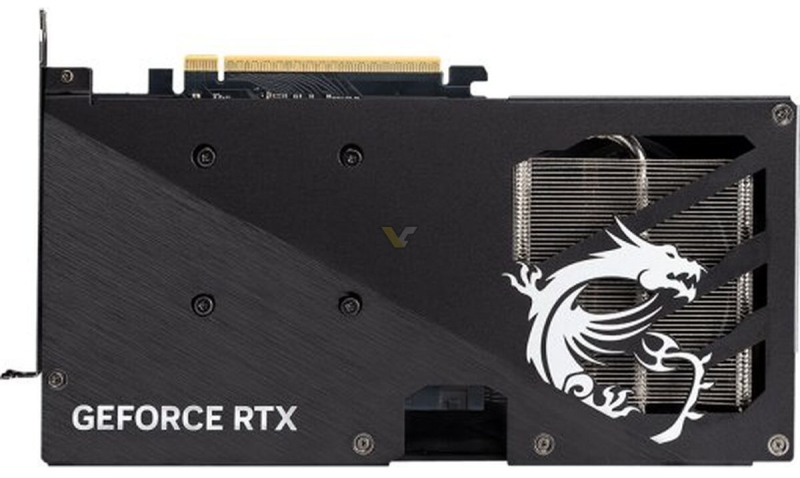
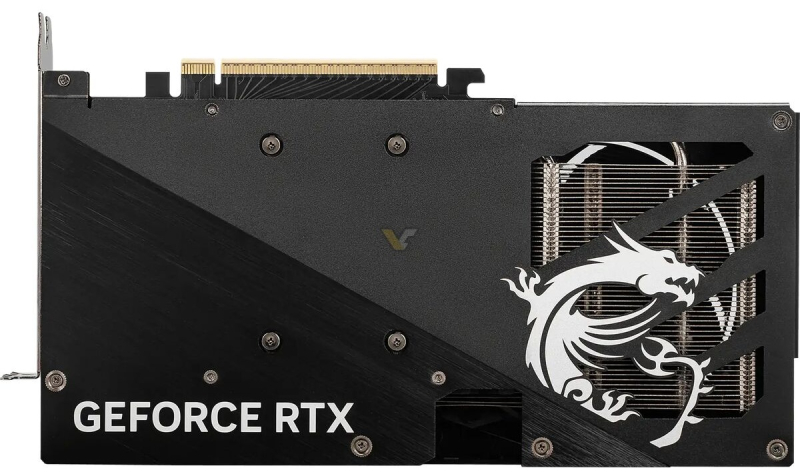
For the end user, the distinction between revisions is only apparent upon close inspection. Beyond the V1 branding, the chip type can be identified via the card's backplate. Due to the physical geometry of the GB205 die, the arrangement of the mounting holes on the PCB has shifted toward a more rectangular configuration, whereas the original GB206-based models featured a layout closer to a square.
For now, MSI has limited its communication to updates on its global website, without disclosing specific availability dates or pricing for the new models. It is evident that such revisions are aimed at optimizing production chains for both Nvidia and MSI, allowing for greater flexibility in semiconductor inventory management without compromising the overall performance of the product line.
 The Horizon of China's Technological Sovereignty in Lithography